

Sweat begins to accumulate under the summer heat as students begin to play their favorite outdoor sports. The heat is more endurable for some than it is for others. However, everyone, especially students, must take measures to adapt to the summer heat.
As stated by Capital Weather , summer this year is expected to be warmer than years previous due to the human impact on climate, as the average temperature has increased since the 2010s. Additionally Brown University states that when body temperature rises over 98 degrees the body begins to become vulnerable for illness. The heat endangers the body restricting blood flow to vital organs and additionally causes heavy sweating resulting in dehydration.
“Overall when kids struggle, just to accomplish basic tasks, outside is probably too hot.” physical education teacher Marc Matthie said. “when you’re not able to handle the heat, that’s a problem.”
According to the American Psychological Association, heat has psychological consequences ranging from irritability to trouble concentrating. Adolescents are particularly at risk for mental health issues, such as depression and social withdrawal, due to the effects of heat on developing brains. For students, these symptoms can become regular challenges as a result of the scorching temperatures during school hours.
Individuals who spend more time outside are at risk for the effects of the heat such as heat exhaustion or even heat stroke, according to the National Library of Medicine. With additional sports practices and games after school, students have extended time of physical activity in the hot weather leading to extreme vulnerability to dangerous sun and heat exposure.

“[The hot weather] discourages me,” junior Alycia Walker said. “I feel like when I have practice in the hot weather it makes me feel more tired.”
To stay healthy during the summer, Princeton University recommends that individuals attempt to protect themselves from the sun through wearing protective clothing and using sunscreen to shield from the harmful ultraviolet rays. Additionally for people who still want to be active in the summer, the American Heart Association suggests that people prioritize their ability to be active in the heat and try to adapt to high temperatures slowly.
“The heat does impact kids because they don’t have the endurance,” Matthie said. “Kids don’t play outside anymore, so they don’t have the ability to deal with the sun for too long.”
Heat plays a part in higher stress in students during testing season with worries for AP exams, SOLs and finals. According to a study by the PLOS climate, prolonged heat exposure is correlated to lower scores in complex cognitive tasks for students due to excess stress as a result of the higher temperatures when the air conditioning inside is not able to be in balance with the heat outside, according to the New Jersey Education Association.
“[The heat] makes me more tired after practice, so I’m less willing to study,” freshman Aiko Brown said. “I cram a lot more before exams.”
To battle the effects of extensive heat during the summer, Johns Hopkins Medicine advises individuals to know what to do in extreme heat. Heat acclimatization, staying hydrated and constantly being alert are some tips that can help prevent the emergency. Adjusting to the weather and changing habits can help reduce discomfort and danger during intense heat, according to the Yale School of Public Health.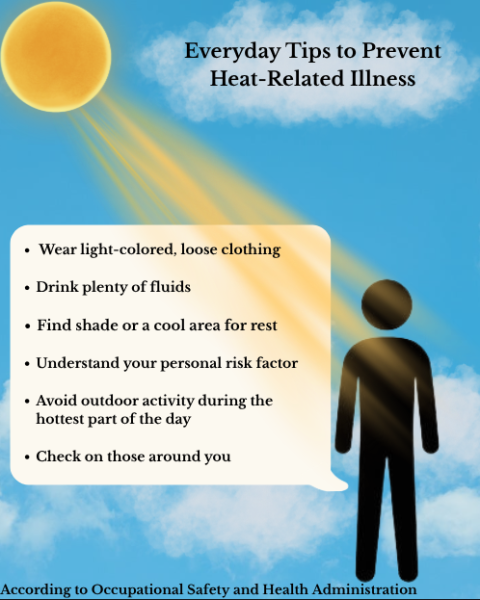
“Go outside, maybe play a little bit, throw the frisbee, get acclimated to the heat.” Matthie said. “So less inside, more outside and it doesn’t have to be anything strenuous, just doing things out there would be good.”
According to Indiana University Health, not hydrating appropriately raises your chance of being harmed by the heat, while there is no requirement for how much someone needs to drink they should drink enough so they feel adequately hydrated. Properly hydrating the risk of illness from the high temperatures is reduced. In addition, the American Red Cross advises individuals to keep an eye out for the health of others by learning how to recognize and respond to heat illness and what to do when they fall ill in the high temperature.
According to the Center for Disease Control and Prevention, although the heat can spark joy, it is important that all individuals stay cautious when engaging in any outdoor activity, as rising temperatures and extreme heat result in illness and death each year. According to the World Health Organization, there are about 489,000 deaths caused by the heat every year, with most being in hotter locations.
“I think moving around and exercising [in the heat] all has to do with motivation,” Matthie said. “So I do think regardless if it’s hot or not, if you’re playing games or you’re motivated, I think that you will move around.”