
Icy sidewalks and early sunsets can turn winter into a season of stillness for many people. Yet despite these challenges, some continue to find ways to stay active.
Centers for Disease Control and Prevention says that during winter, staying active is a key part of overall wellness. According to research published in the Phi Kappa Phi Forum by Tonisha Melvin movement improves circulation, maintains warmth and helps support the immune system during peak cold and flu season. The research explains that even simple activities like brisk walking, yoga or jump rope can help people stay healthy when temperatures drop.
“I walk home from school every day,” freshman Shalika Kothuri said. “Even though it’s cold, it actually helps me unwind after classes.”
According to Science Direct, nearly 44 percent of people are more likely to delay exercise in winter than in summer, especially when rain, ice or snow make outdoor activity harder to maintain. This research suggests that identifying what specifically makes winter exercise difficult helps people build routines they can actually maintain throughout the season. By recognizing barriers such as icy conditions, limited daylight or lack of motivation, individuals can plan practical alternatives like indoor workouts or structured activities that keep them consistent.
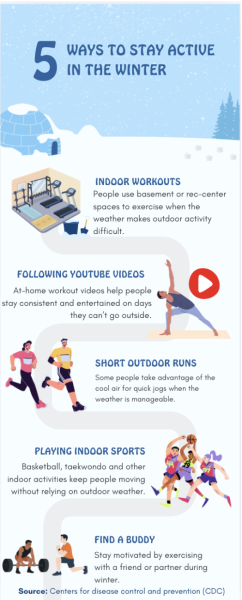 “When it’s freezing outside, I usually work out in my basement gym and follow YouTube workout videos that keep me entertained,” junior Shreya Siva said. “Having that setup helps me stay consistent, even on days when I can’t walk or go outside at all.”
Research published in Frontiers in Psychology shows that social support plays a major role in whether people stay active during challenging conditions, including colder seasons. The study found that exercising with peers or in group settings increases motivation and consistency, which can help individuals maintain regular activity even when winter weather makes solo exercise harder to sustain.
“I usually go to the recreational center to play basketball with my friends,” junior Pranav Adivi said. “It keeps me active without feeling like a workout, and it’s something I actually look forward to when it’s cold outside.”
The BYU Undergraduate Journal of Psychology shows that extracurricular involvement can help people maintain consistent physical activity by providing structured, scheduled movement that does not depend on weather conditions. The review found that organized activities, especially sports and fitness-based programs, support regular engagement by removing the need for students to self plan workouts and by offering predictable opportunities to stay active throughout the week.
“I do taekwondo twice a week, and it keeps me active without having to think about what activity to do,” Siva said. “I just go to practice, and it keeps me moving in winter.”
Other activities people turn to in the colder months include short jogs, brisk walks and spending time outside on days when the weather is manageable. Kothuri feels that being able to finish a workout in harder circumstances is more rewarding.
“Sometimes it’s hard to get out and workout in the cold when I can just sleep on my bed, but it is always so refreshing everytime I actually go on a run which is worth it for me.” Kothuri said.