
Junior Veda Rayavarapu presses a NeeDoh cube between her fingers, the soft surface expands and slips back into shape, a motion almost automatic for her. For Rayavarupu, fidget toys serve as a way to stay focused throughout the day.
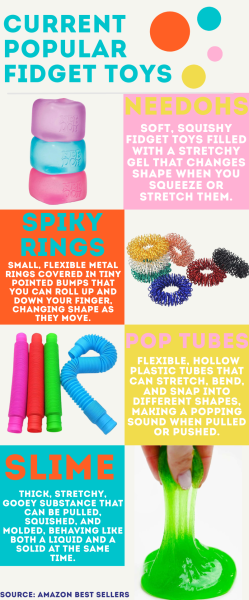
Recent listings from Amazon’s Best Sellers in fidget toys show that squeeze-based and sensory items are currently popular. This includes NeeDoh cubes which are butter squishies with a soft, airy texture. Other options are glossy slime which pulls and stretches between hands and magnetic fidgets like Speks that click and snap together with each movement
“NeeDohs are basically like slime, just without the mess,” Rayavarapu said. “I think they’re so popular because you can use them all the time and not worry about them getting everywhere.”
Research published in Frontiers in Physiology suggests that fidgeting can act as a way to make up for lost focus and help individuals maintain attention during mentally demanding tasks. Specifically, they found that small, repetitive movements may support sustained focus by helping regulate energy levels and preventing lapses in attention, particularly in structured environments like classrooms.
“Even if I’m just playing with my pen or something small, it helps me focus more,” junior Ved Patil said. “If I don’t have anything to do with my hands, I get distracted way easier because then I can’t pay full attention to my actual work.”
While fidget tools can increase on-task behavior, their impact on academic performance is less consistent, according to research from Psycnet. Students using fidget devices were more likely to stay oriented toward their work and reduce disruptive behaviors; however, this did not always translate to improved work completion or accuracy.
“It doesn’t always help with the work itself, but it still makes it easier to sit through class,” Patil said. “I like having something to do with my hand while listening to my teachers.”
Kothari remembers using fidget spinners when they were popular, but now finds herself keeping up with newer fidget trends as they emerge. Instead of sticking to one type, she moves between different fidgets. According to Hubei Institute of Fine Arts the rapid rise of fidget toys is largely driven by social media, where viral videos and influencers increase their visibility and appeal to a wide audience rather than sticking to just one, as each new trend offers a different sensory experience. As certain fidgets go viral, they become widely used before fading out and being replaced by the next trending item, creating a constant cycle of popularity.
“I don’t really use the same one for that long,” Kothari said. “Once something new comes out, I usually end up trying it because I like seeing which ones feel more satisfying.”