
Winter draws closer and preparations are done to welcome the holidays. These traditions have evolved all around the world and encompass a blend of culture and religion in celebrations.
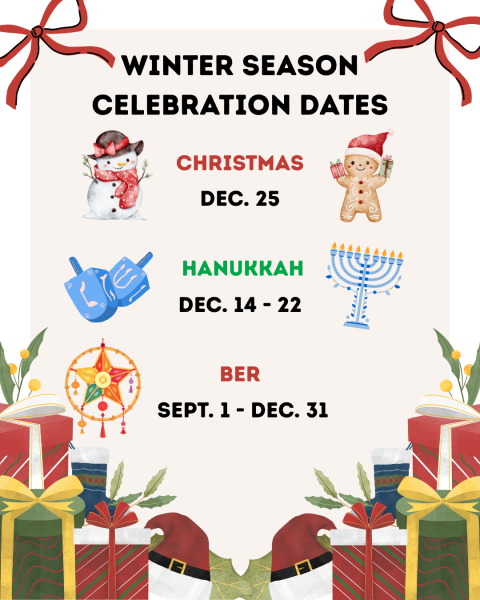
One of the holidays celebrated is Christmas, also known as the birth of Jesus Christ, which falls on Dec. 25. It is a Christian festival that has evolved into a secular family holiday observed by both Christians and non-Christians alike. Comprehensive Service Sites Special Education teacher Andria Watkins, who practices Christianity, celebrates with her friends and family as well as participates in her Christian community’s events.
“We did do a Christmas Eve ceremony where we would do speeches and nativity plays,” Watkins said. “We would feed the hungry. We would have a food pantry at the church. I have done some caroling with my church, so we go around and sing, and we also [went] to nursing homes, usually for the elderly. I [went to] nursing homes for children as a teacher.”
In Southeast Asia, specifically the Philippines, the longest Christmas celebration takes place, with the Christmas season starting as early as Sept. 1. They have a season called “Ber-months” which signifies the start of the Christmas season because the four months September, October, November and December end with the letters “ber.”
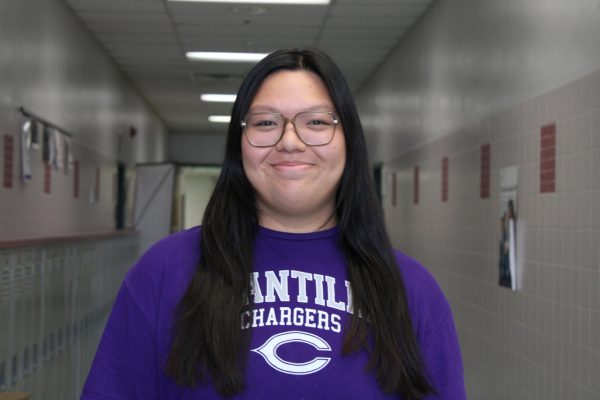
Furthermore, they have a tradition of creating Parols, which are star-shaped ornamental lanterns used to light the streets and attend a mass called Simbang Gabi, which means “night mass.” Junior Jeanna De Jesus has Filipino roots, practices Catholicism and goes to mass at midnight for Christmas Eve.
“I set up my Christmas tree early,” De Jesus said. “My local church that I go to holds a Simbang Gabi on Christmas Eve. After that, there is a reception where we have food and desserts and just spend time together.”
However, not all people in the United States have a big community they can celebrate and share their traditions with. According to De Jesus, Filipino traditions are not as popularized in the United States, so there aren’t many opportunities to practice them, but she still tries to keep their traditions alive.
“I like my Christmas traditions,” De Jesus said. “I don’t want to lose my culture, so I am definitely going to continue practicing [them] in the future.”
For freshman Remi Hirsch, who practices Judaism, Hanukkah is the holiday she observes. The word Hanukkah is Hebrew for “dedication” and is known as the Festival of Lights. The holiday commemorates the victory of the Maccabees over the Syrian Greek army, rededication of the Holy Temple in Jerusalem and the restoration of its Menorah which is a lamp.
“We say prayers before [Hanukkah], we light the candles and put the Menorah where our kitchen window is so everyone can see it,” Hirsch said.
It begins at sundown and goes for eight days with this year’s observance from Dec. 14-22. The start date changes every year based on the Hebrew calendar.
“I celebrate it every year with my family,” Hirsch said. “Sometimes we also go to Philadelphia because that’s where most of my family lives, and my uncle hosts a really big Hanukkah party and it’s a really big family reunion.”