After four years under former governor Glenn Youngkin, Virginia greets a new governor, with a different approach and new policies for education and schools across the state. Governor Abigail Spanberger was sworn in as Virginia’s 75th governor on Jan. 17.
Education reform, accountability
Youngkin’s ALL In VA, a Virginia Department of Education (VDOE) initiative addressing student learning recovery following the pandemic, invested more than $418 million in school divisions. This initiative hoped to reduce chronic absenteeism, accelerate the implementation of the Virginia Literacy Act and institute intensive tutoring to address learning loss that resulted from COVID-related school closures.
“[Parents] want to be able to make sure that their kid is succeeding and if there’s one thing that Youngkin did right it’s to put parents and teachers back in communication,” senior president of Young Republicans Jackson Fuller said. “I would say parents and students are enjoying communication more.”
As Virginia’s leadership transitioned, education policies remained a focus of the new administration. On her first day, Spanberger declared Executive Order 4, directing the VDOE to focus on literacy, mathematics, school accountability and assessment performance. The order creates workgroups to improve implementation of the Virginia Literacy Act and expands access to advanced math by increasing the number of qualified math teachers.
Additionally, it broadens access to AP and IB classes and directs the VDOE to review the School Performance and Support Framework. The order also implements recommendations from the 2025 Joint Legislative Audit and Review Commission, which conducts performance audits, program evaluations and policy analysis.
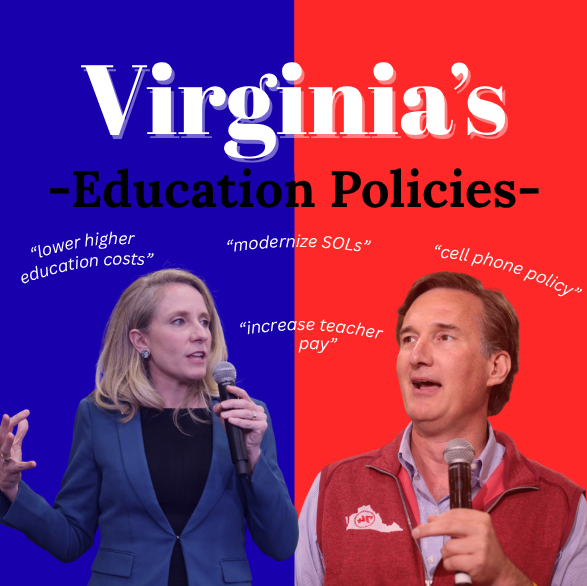
Both the previous and current administrations addressed teacher shortages. Youngkin provided $2.28 million per year for grants, scholarships and payments to recruit teachers for public schools. The VDOE also implemented the School Performance and Support Framework, which gave parents and the community information about school performance and areas for improvement. To address Virginia’s teacher shortage, Spanberger aims to increase funding for educator apprenticeship programs to increase the recruitment pool, increase teacher pay and boost access to educator mentorship and professional development opportunities.
“Youngkin and Spanberger both agree on the push to get teachers dual enrollment certified,” social studies teacher Andrew Tramel said. “The assembly has passed legislation to help fund teachers to go back to school to get graduate credits.”
Cell phone policy
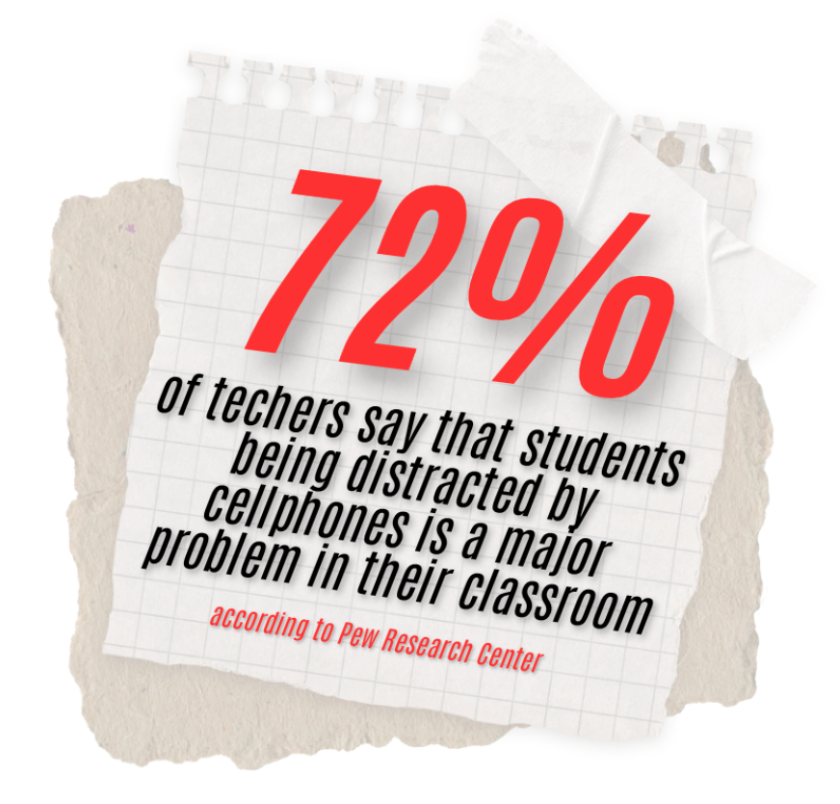
According to a study done by Pew Research Center, 48% of surveyed teens say social media has a mostly negative effect, and one-in-five teens say it hurts their mental health and academic performance. In response to this trend, Youngkin issued Executive Order 33, which went into effect Jan. 1, 2025.
“The cell phone policy, I don’t think it’s something that all of us like all the time, and it’s not always fun, but I do think it’s in the better interest,” senior president of Young Democrats Aarna Bhamidipati said. “If you have your phone out during class, you’re going to be distracted.”
According to VDOE, the order defines cell phone-free education in Virginia’s schools as “bell-to-bell,” requiring public school divisions to create and adopt their own local policies and procedures.
Spanberger aims to advocate for policies that address mental health and device use, by proposing support for wraparound services, which are support systems such as counseling, mental health care and academic assistance; and by recommending guidelines for device use to enhance learning, rather than mandating specific restrictions like Youngkin’s order.
“She has more of an idea on how to support and holistically approach students well-being as part of their education which is something that Youngkin didn’t focus as much on,” Bhamidipati said.
Standards of Learning (SOLs)
According to VDOE, during his term Youngkin ordered Virginia’s SOL exams to count for 10% of a students’ final course grade, which will go into effect for the 2026-27 school year. This plan will also shift SOLs to a 100-point scale and change test timing to the last two weeks of the year.
“I feel like placing that emphasis on standardized learning isn’t always reflective of student success,” Bhamidipati said. “That’s probably going to discourage students with gaps in their learning more.”
Spanberger calls for modernizing SOL assessments to ensure they are high-quality and effective measures of student proficiency while aiming to reduce excessive testing time. Her emphasis is on giving parents and educators clear information to support learning and using assessments as tools for improvement.
Higher Education
After implementing a tuition freeze to prevent colleges from raising prices, Youngkin worked with governing boards to limit future tuition increases and improved transfer pathways between colleges. He also supported expanding career-aligned opportunities by backing the College and Career Ready Virginia Program, which increased access to dual enrollment for students.
“They both want students to be prepared for the world,” Fuller said. “What Youngkin does is he is going to prepare students for the world in a more conservative way, while Spanberger is going to do that in a more liberal, more moderate way.”

To improve financial aid options for students by streamlining and enhancing state support, Spanberger aims to direct the State Council of Higher Education for Virginia (SCHEV) to review the potential impacts of staffing shortages in the U.S. Department of Education on Virginia students’ access to financial aid assistance and provide recommendations to mitigate impacts through state-level administrative support. She also stated she would work with the General Assembly to combine Virginia’s primary public financial aid programs, the Virginia Guaranteed Assistance Program and the Commonwealth Award, a state-funded grant for students, as well as continue investments in the Virginia Tuition Assistance Grant program.
“If she wants to make changes in terms of making public [universities] more affordable and tuition more realistic,” Bhamidipati said. ”I think that’s a great policy to have because as time goes on, it’s going to get to a point where it’s genuinely unaffordable for a majority of residents.”