*This transcript is lightly edited for grammar
Claire:
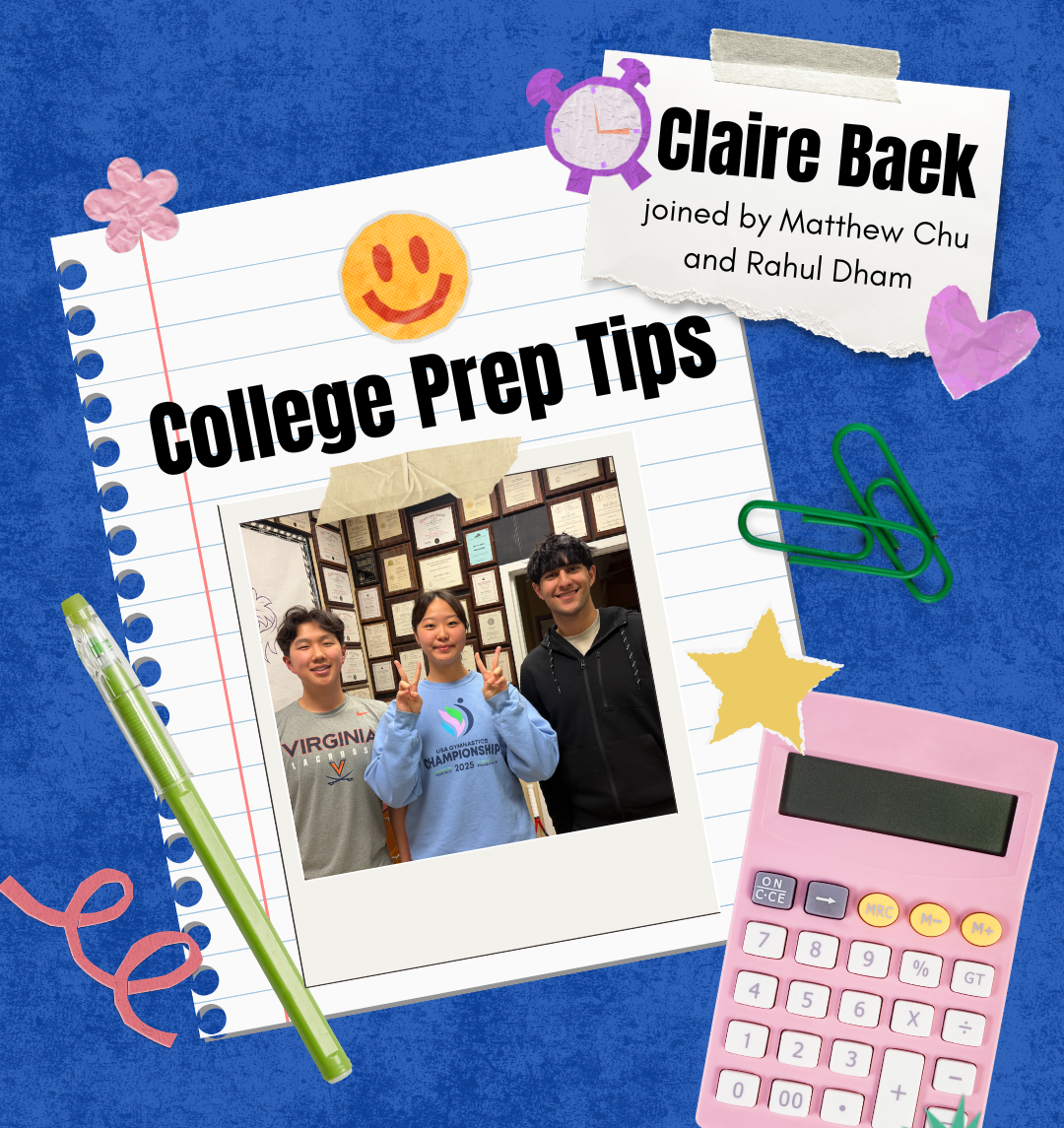
Hey everybody! Welcome to another podcast on The Purple Tide. Today, we are calling all juniors and sophomores who are starting to feel the pressure of college inching closer. I am your host, Claire Baek, and today we are joined by two other seniors, Matthew Chu and Rahul Dham, to share with you some college prep tips. So before we begin, should we all formally introduce ourselves?
Matthew:
Hi, I’m Matthew Chu. I’m a senior at Chantilly. I am interested in chemistry on a medical route. I applied to both the traditional schools and the BS/MD route, which is a direct application to med school.
Rahul:
My name is Rahul Dam. I’m also a senior here at Chantilly, so I’m interested in the finance side of business, especially with a concentration in math. So I applied mainly to finance and business programs that were available, and if not, then math and stats.
Claire:
And again, my name is Claire Baek, and I’m a senior at CHS as well. I applied public policy to a lot of my schools. Some schools that had communication or journalism majors, I applied to that as well. Okay. So we just finished going through the college application process. Having been done, we’ve been reflecting on things we might have done differently or things we have done right. So we wanted to share that with the juniors and sophomores of Chantilly.
So most juniors and some sophomores are probably going through the process of exploring their passions and interests. So I remember I started really thinking about it sophomore summer, so shall we start talking about some classes that we enjoyed or helped us discover our passions?
Matthew:
Yes. So, especially in the medical route, I was always very interested. I really found a great interest in the sciences, especially being very interested in chemistry and biology freshman year. That’s when I really started to decide to take the AP sciences and just more sciences where I could really continue learning.
Rahul:
For me, it probably started in my sophomore year. I really loved pre-calc and then transitioning into junior year, econ was definitely my favorite class that I’ve taken. For those of you, I know Mr. Clement’s retiring this year, but it was a really fun class with him, and that’s where I really found that, you know, I’m good at this, I really wanna do this, and then, same with Calc BC. So it’s really important that you take these courses that you think you’re gonna enjoy and that are new, and open up these interests and avenues for you.
Claire:
Yeah, for me, I kind of knew that I wanted to go into the public policy route or the journalism route through the journalism class, but also through AP history courses such as AP World and AP US history. But as Rahul said, it’s very important for you all to kind of explore different AP classes. I remember in freshman year, I tried AP Computer Science Principles, and I went in with no computer science knowledge. Didn’t really do well in the class, but that kind of solidified my belief that maybe computer science isn’t the route for me. So yeah, just, like, be willing to just explore and all that.
What APs do you guys think really, like whether you liked it or not, helped you or helped you grow as a person, or you think is worth it for college?
Matthew:
So I think, being a chemistry fan, AP Chemistry was, of course, my favorite AP class. But along with this, I really enjoyed AP Language and AP Literature. They just teach you skills, how to both do research, but also how to kind of frame an argument and be able to kind of expand the communication. That’s really important.
Rahul:
Yeah, kind of going off what Matthew said, I know I talked about business and STEM, but AP Language, I feel like, it was honestly the most important AP class that I’ve taken in high school, just because of the jump that it gives you in your writing skills, which is super important for these college applications.
And one that we haven’t mentioned yet, I would say is AP Physics, if you like the STEM field, if you wanna go into engineering, or honestly, if you just wanna attack problems with a creative and critical route. That’s what I feel like with physics. There are so many different ways you can go; there are different derivations, there are different equations, and it’s up to you to figure out how to use them, and that’s a really great style of thinking that you learn, especially in your junior year.
Claire:
From what I’m hearing, you guys learned a lot from the APs you guys have listed. When I was a sophomore and junior, I had the mindset of like, I have to take as many APs as I possibly can. I tried taking core classes, all APs and stuff, which is great, but I feel like for some APs it’s a lot of work, but sometimes it’s not as like, you don’t get as much out of it. Because obviously, some people do APS for the college credit that comes with it.
So for state schools such as UVA, Virginia Tech and William and Mary, they take around an AP score of five to three, depending on the course. So, before choosing what APs you want to take, just don’t overload and make sure that the college you’re maybe eyeing or a college that you might possibly want to go to, accepts that credit. Also, check what score you need for that credit to count.
Matthew:
And then building off of what Claire said, a lot of these colleges do have prerequisites, like a university writing class. So it’s great to look, kind of, look ahead and maybe see what classes you can take for credit in high school to get out of the courses that might be a little bit harder in college or take up a lot of time.
Claire:
Yeah, and also I took a few DE classes. I took Entrepreneurship DE and Latin 4 DE. For DE classes, usually they count towards credits for some state schools and usually community colleges. If that is the route you want to take, that is a good option for you to also take.
And talking about AP courses, we can’t forget the AP exam. So, I know with AP exam season approaching, a lot of juniors and sophomores, also seniors, are kind of stressing about that. So, can you guys share some ways you guys prepped for AP exams and got ready for them?
Matthew:
So the best ways that I’ve prepared over the last, I’d say, four years of high school are definitely looking back on what units you need to know. If, especially if you’re taking four or five APs in one year, it’s not like you can cover every single thing, topic, every single little subunit within like the one month or two months of studying. So, definitely look back on each of your classes and create a plan to address everything that you, maybe are a little unsure about or have gotten wrong in the past. Along with this, you can ask your teachers to look at previous tests that you may not have done so well on and see again what you need to work on.
Rahul:
Yeah. Honestly, most, if not all, APs definitely offer a breakdown of what units are gonna be on the exam for what percentage. So it’s like for AP Macroeconomics, there’s one unit which is heavily weighted, it’s maybe 30% of the exam. So, looking out for that so that you can maximize the efficiency in your studying is very important. But also, I think the two most important metrics after that are making sure that you pay attention in your class throughout the year because just a little bit of effort every day in class, a little bit of an extra effort can take literally weeks, like so many hours off your studying. Like for physics, I had friends who were studying a lot, and it was really stressful for them. But for me, since I loved the class, I paid attention and I did all the work, I found it easier.
Claire:
Yeah, very good point. I feel like AP testing’s very stressful at that time, but you get past it, and because the scores come out like later in the summer, you kind of forget about it. And then after AP exams for AP classes, it’s usually just like, I guess, for some classes you learn more, but for some classes it’s usually pretty chill, some fluffy assignments to help your grade. So, I think, if you’re a junior or sophomore, really stressing about AP exams or the night before, you’re cramming, which I do not recommend, and you’re stuck on a problem, do not stress over it and, I guess kind of just go with the flow and study ahead of time, please, that is a big thing.
Rahul:
For my Calc BC students, make sure you know how to do your polar things. That’s gonna show up in the exam.
Claire:
Yeah, and then continuing our talk about tests. A lot of colleges have brought back standardized testing. So seven out of the eight Ivy League schools have brought back standardized testing, all except Columbia University. UVA was test-optional for the fall 2026 cycle; they have not released anything for the fall 2027 cycle. But, just in case, for people who want to go to these schools that require SAT or ACT scores, how did you guys prepare for the SAT or ACT?
Matthew:
So yeah, it’s definitely important to take your SATs or ACT, whichever one kind of fits you best. If you are taking the SAT, which I took, I would definitely recommend checking out the SAT College Bank. There are so many different practice questions on there that are from actual, previous SATs, and it kind of gives you a good feel of what the actual exam is like. But along with this, just take as many practice tests as possible. You can use the ones on Blue Book, which are a little bit easier than the actual test, but you can find different practice tests out there. And you can also find previously released practice tests, and those are just great ways to continue prepping and studying for the exam, because as many times as you take it, it doesn’t really affect how much like—
Claire:
Like your chances of getting in, right?
Matthew:
Yeah.
Claire:
But yeah, you have as many tries as you want, so.
Rahul:
Yeah. And it’s important, like the SAT and ACT, they’re pretty different tests, so just make sure you understand what both of them are. Generally, the SAT is more popular, but for some students, I have some friends who took the SAT, and they didn’t really like it. They took the ACT, and they got really good scores, and they’re really happy with it. So that’s definitely a possibility.
Additionally, there’s a plethora of free resources, like Matthew mentioned, the Question Bank from the College Board. There’s Khan Academy Resources, there’s online resources, which you can get trials for, although they’re only for a few days, if you’re gonna take it, you’re studying for what, three to four weeks? So, even just getting one week of free trials, which is just a bunch of extra resources, is super helpful. So definitely look into these free resources before you start thinking, “Oh man, like this person did this paid program. Maybe I should get this.” If you’re someone who learns with a tutor and that’s what the route you wanna go, that’s perfectly fine too. But, if you think that you can do well with the free resources, there are so many out there. That’s all I used for my SAT, and it came out pretty well. Definitely don’t feel like you have to get a tutor or pay for these programs.
Matthew:
Yeah, and definitely building off of what Raul said, being able to also ask the upperclassmen, maybe if they have textbooks or like different practice tests, like the Princeton Review book or the Erica Meltzer books. Definitely asking maybe the upperclassmen if you don’t wanna go out and buy the textbook. Just asking them for their resources as well, it’s just a great opportunity to stay connected.
Claire:
So, as Rahul said, I think I’m one of the people he was talking about. So I took both the SAT and ACT to kind of gauge which one I liked better. I started with the SAT, and that was when it turned online. After one PSAT and one SAT, I really did not like the online testing format, so I switched over to ACT. For those people who are not familiar with online testing, ACT is a great option.
ACT has a reading, writing, math and science section. I am pretty sure the science section is now optional, but they’re technically more questions and a shorter timeframe. But I would say that for the reading section, definitely, the level of analysis is a lot less. And most of the answers are within the text as long as you read it carefully.
So I guess the level of questions is a little bit lower than the SAT, so that might be easier, but there is a time crunch. So, if you struggle to solve problems in a short timeframe, then maybe SAT is for you. Yeah, obviously standardized testing is important, and I know a lot of students obsess with AP scores, GPA and standardized testing scores. But to be honest, writing college application essays and stuff, putting together my whole portfolio and Common App, all those are very important, but I felt like having passions or hobbies to write about came in really handy.
Personally, I felt like I explored my passions mostly through extracurriculars or volunteering. So, what extracurriculars were you guys involved in? Whether that be volunteering, summer programs, jobs and how has it kind of shaped your interests and passions?
Matthew:
Yeah. So, being on the medical tracks so far, I’ve always been very interested in getting within both the clinical aspect and the research aspect of things.
So in my sophomore summer of high school, I was volunteering within a few different hospital systems, and I really enjoyed it, and it’s something I wrote about on my college apps. Just being able to work with patients and being able to kind of learn their stories. And then my junior summer in kind of junior high school, I worked on a lot of research, working on specifically in the field of oncology. But, I think doing anything that you’re really passionate about, something that can really connect your story, is something that’s super important for college.
Rahul:
Yeah, so I agree with Matthew, with finance, definitely getting that in-office experience as a high schooler is much more difficult. But in research, there are a lot of opportunities. So I did ASIP, where I did research basically with a GMU finance professor. That was great. Research for finance generally is quite open-ended as well, so you can take what kind of direction you want. I also made a website of my own for finance. So any project, that obviously doesn’t have to be the same, but any project, basically a passion project, those are always really fun. If you pick something that you’re kind of committed to, which you enjoy doing, then it’s a great project. You’re helping people, and it doesn’t even feel like a chore. And lastly, you know, getting involved with clubs at CHS, like if you guys know the CHS Investment Club, that’s a great resource I got involved with. It’s been really fun, you know, I’ve really enjoyed it. I think it was definitely helpful in my college extracurriculars, and honestly, just expanding my knowledge and love for finance.
Claire:
Yeah. Matthew, can you talk to us more about your research in oncology? That sounds pretty interesting.
Matthew:
Yeah, so it might be scary, and if you’re a sophomore or junior right now, you may not know how to get into research, but it’s truly through sending cold emails, especially within medicine.
A lot of professors are kind of wary about taking on high schoolers. They’re a little concerned about maybe we don’t have the maturity or the skills to be in a lab, but truly if you do send a, like well-published resume with a couple of things that you’re interested in about the lab, maybe read a couple of articles about a certain lab and then send a cold email, it makes professors want to talk to you more. And a lot of professors are busy, so it’s okay if they don’t respond or maybe you get ghosted a few times, but if you continue sending cold emails, that’s kind of how I landed my position.
It’s really interesting, and I was at the University of Pittsburgh last summer working on osteosarcoma and trying to predict metastasis, which is the spread of cancer. And it was a really positive experience. I was in a lab of about 10 people, and we were working pretty well throughout the summer. I think I was working for about nine weeks. That’s continued throughout the school year, where I’m working on dry lab. So over the summer, I was in a wet lab, actually working on cancer cells in a lab every day and trying to grow them and seeing how they spread. But now you can also do dry lab work, which is more statistical analysis, or like research and publishing.
Claire:
So, in the humanities route towards public policy, I kind of looked into more summer enrichment programs. They have them for most fields of study. I had positive experiences at Girls Day, which is like a mock city, mock government, and I ran for Lieutenant Governor there. I had to campaign and everything, so just getting that firsthand experience and stuff about how our government runs was very interesting.
Also, I continued my work in journalism. So I’m obviously in the school newspaper, where I’m publishing this podcast right now, and I continued my work outside of school through broadcast journalism. I reached out to PBS, a pretty famous broadcast organization. As Matthew said, just cold emailing. I emailed a lot of producers and people who work with the Student Reporting Labs there just to get opportunities to publish more stories beyond summer throughout the year.
I think a good resource would be Mrs. Rodriguez’s Career and College newsletter. It comes in your school email; you should have one. They have job opportunities, summer enrichment opportunities and internship opportunities, so I would definitely take a look at that. Some have deadlines earlier in the year, so if you are a sophomore applying for a junior program, definitely check starting in November. Like some programs, the more competitive ones usually start their application cycle a lot earlier.
And I know we’ve talked about really big things here, like research and like programs, but there’s also just simply volunteering. Over my sophomore summer, I went to help clean up a national park, Fort DuPont Park, in D.C., which is in Anacostia, which is a black minority neighborhood. Just being able to volunteer with people there and try to clean up the neighborhood, talking to people there, really kind of opened my view, and it’s something that contributed heavily when I was writing my college applications. So, It can just be simply picking up trash, looking at what’s around you and looking at the resources around you. But extracurriculars, it’s like a really broad thing, and you can just experiment with a lot of things within it.
Rahul:
Yeah, even if you don’t have the strongest extracurriculars, if you can show kind of a clear spike in your interests, then that’s really good, especially for schools where you’re applying directly to a major, whether that be medical, whether that be business or whether that be humanities. If you show a clear spike of interest that you’re really committed to one certain subject, it can go a really long way.
Matthew:
If you’re gonna do a passion project, which is a great opportunity to really kind of build your ECs, my biggest recommendation is don’t do it for college. Do it for something you’re actually truly interested in. Because if you’re interested in it, that’ll push you at the late nights, that’ll push you after practice, that’ll push you when you’re really exhausted to continue doing it, to continue trying to grow and really stay connected to it, and not just for something that you can put on your college application.
Claire:
That cause.That root cause of why you’re doing it. Just ask yourself, like for every EC, even like just go into a program or research or like volunteering, like “why am I here?” and like, “why do I wanna do this?” Just thinking about that can come in handy in the future, once you start developing your college application itself.
Okay, that’s all I have planned for us so far. Is there anything you guys want to add on, say, like one thing you recommend, or a few things you can recommend to juniors and sophomores who are about to go through the process, or thinking about it?
Rahul:
Yeah, so I wanna start with kind of near the end of the process with the essays, like once you’ve gotten all your ECs and stuff kind of set up. So, the essays feel far more daunting than they actually are. Once you start working on it, it doesn’t feel as bad. And especially if you’ve, you know, if you like expressive writing, if you feel like you’re able, you enjoy kind of writing about yourself and like your character and expressing yourself in unique ways, parts can actually be fun. And especially if you’ve started early enough that you’re not cramming your essays, that’s really good.
Claire:
I agree with Rahul, start early if you really want to not cram last minute, I really recommend that or just thinking of ideas. If you’re too busy in the summer to actually write your essays out, just having a list in your notes app, that’s what I had, and then if I had an idea, I knew I was gonna forget it later, so I just jotted it quickly down in my notes app, just a few sentences, so that I’ll have an idea of what to come back to when I hit writer’s block.
Matthew:
Yeah, and building off of that, applying to both BSMDs but also the traditional four-year undergrads, the schedules of when you actually need to submit your applications are a lot different. So I kind of created my college list and kind of in March or kind of around now of my junior year. I saw that, hey, some of these BSMD applications are due in really early October or late September, so that’s kind of where you can prioritize your applications.
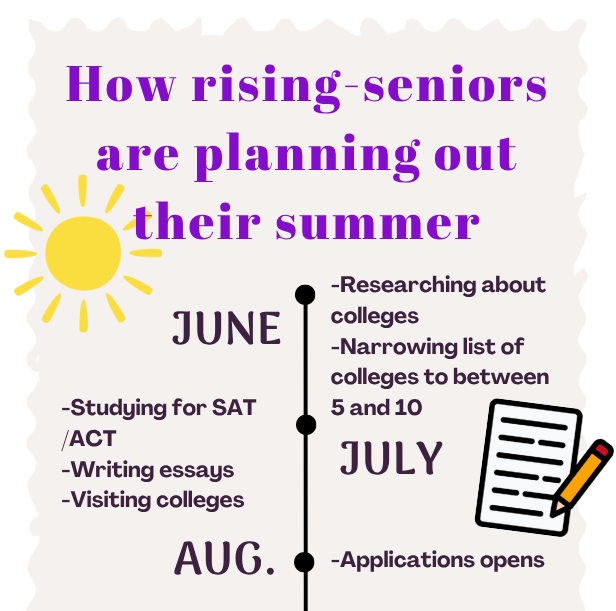
Being able to focus, I think, on the common app, which I believe the prompts just came out, but on the actual personal statement over the summer, is a great opportunity to really have that time. And then in August, when the individual school’s prompts come out, that’s when you can start working on the supplementals.
Claire:
I know we’re talking about college essays right now. You do not need to start in mid-March. Yeah, do not stress out about it. But yeah, just definitely like whenever you’re listening to this, whether that be in the summer or April, if you’re listening to this at all, I would recommend around like the end of school, like around June, take a look, unless you’re doing BSMD, as Matthew said, you might wanna start a little bit earlier.
Rahul:
Right now, you should be thinking about the activities that you’re doing and what you’re gonna write about, not what the prompt you’re writing about.
Claire:
Yeah. I think, definitely, like AP Lang last year, I had Mrs.Cloughtery, and the last assignment, our last summative, was writing a draft of our common app. I did not end up using that common app, but it definitely got me thinking and just processing what I might write about and what I wanna kind of focus on.
Just go with the flow and think what’s right. Always feel free to ask for advice from upperclassmen or seniors who have just finished the process. I know a lot of juniors have been asking me, and that’s why I kind of had the idea to do this podcast. A lot of juniors have been asking me like, “What courses do I take? Is my SAT score good or bad? Are my ECs enough? Are my essays good? When do I need to start the essays?” and stuff like that. That really just depends on which college you want to go to, your background and your financial situation. Everything just depends on you. This is all flexible. You do not need to follow this.
And yeah, anything else anybody wants to add?
Rahul:
Yeah, I think something Claire actually brought up that was really good is like, “Oh, is my SAT score good enough?” The SAT is only one aspect of your application. You gotta remember that that doesn’t define you personally. I feel there were definitely some parts of my application where I was weak, and I’m sure everybody feels that way in some sort of way, but one part of your application is not gonna drag you down. Nobody can be perfect, so even if you feel you have a weak SAT score, if you feel maybe you don’t have the best ECs, if you aren’t happy with kind of how your GPA turned out, it’s just really important to remember that you’re trying to show the admissions people, you’re trying to show who you are and, you’re not defined by these singular test scores. You’re not defined by how, like whether you did a super impressive research project or some, or a summer program like that, so just keep that in mind and don’t let that get to your head.
Claire:
Yeah, I totally agree with that. Don’t let a number define you. I know I obsessed with my GPA, but do not obsess over it. At the end of the day, you’re trying to show the college admissions officer who you are, rather than putting a label on yourself, like putting a number on yourself, which I don’t think is right.
I think that’s a good place to wrap it up. Thank you for your wise words. I would like to thank our guests for joining me today, and I hope that the variety of interests and passions reaches more students. So, if you want an episode on college essay tips, more tips, I guess, because we had some here, please leave a comment on Instagram or the Purple Tide website. But for now, signing off is Claire Baek from The Purple Tide.
Bye!
Credits for music:
Music: Hold You by Limujii https://soundcloud.com/limujii
License: Creative Commons — Attribution 3.0 Unported — CC BY 3.0
Free Download / Stream: https://audiolibrary.com.co/limujii/hold-you
Music promoted by Audio Library: https://youtu.be/Ot9187kyNpM?t=146