Under the glow of a bedside lamp, junior Sahana Kumar writes carefully, capturing pieces of the day that didn’t quite make sense before. Thoughts that once felt overwhelming begin to settle on the page, shaping into a story that helps her understand her own experiences.
“Sometimes I’ll be complaining about something or somebody and then later I’ll look back at it,” junior Sahana Kumar said. “I’m trying to reevaluate my own bias so it’s a way I can look at my own mindset.”
According to Verywell Mind, journaling is the practice of writing in a diary or notebook to explore thoughts or feelings about events in life. This type of writing allows people to reflect on their experiences and process emotions by putting their thoughts on paper.
“I like to journal at least two times a week, usually before I go to sleep,” senior Aurora Inca said. “It helps me regain my thoughts for the next day; I have a clearer mind.”
As stated by the National Library of Medicine, while writing about their lives, individuals reorganize biographical events and connect their thoughts and emotions together. By revisiting and reinterpreting prior events through journaling, people can reflect on their feelings and make their emotions feel more rational and understandable.
“It’s a way for me to collect myself, understand what’s going on and, if anything bad happened, it helps me figure out how I can improve on that,” Kumar said.
Journaling also helps reduce stress and anxiety by allowing individuals to release pent-up emotions according to Bloomington Meadows Hospital. Writing things down can be an emotional release that lowers stress levels and improves overall well-being.
“It can be a really helpful emotional outlet every now and then; you can vent to it if you’re stressed,” junior Clare Colburn said. “I haven’t been journaling for a super long time, but I definitely looked back at old things and was like, ‘Wow, that was not as important as I thought it was back then.’”
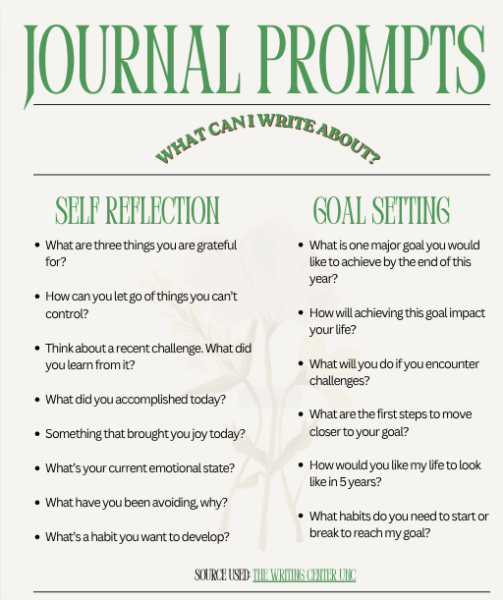
Journaling can take many different forms. Verywell Mind describes practices such as free writing, gratitude journaling, emotional reflection and bullet journaling for organizing goals or tasks. Each method serves a different purpose such as lowering stress levels and tracking growth, so people often choose the approach that best fits their needs.
“I journal just so I can get better at writing for English class’” Colburn said. “I know some people do prompts but I just free write. I go and type whatever, maybe something interesting that happened that day or something that I am researching.”
Journaling can also encourage healthy habits by helping individuals track important aspects of their daily wellness habits, according to Bloomington Meadow Hospital. By monitoring these behaviors, people can identify areas for improvement and make positive changes that support overall mental health by getting off media.
“It’s pretty relaxing, and it’s something I can do in my free time which is not scrolling endlessly on TikTok,” Kumar said. “I feel like journaling is a useful way you can get off of that and have something productive you can do in your free time.”