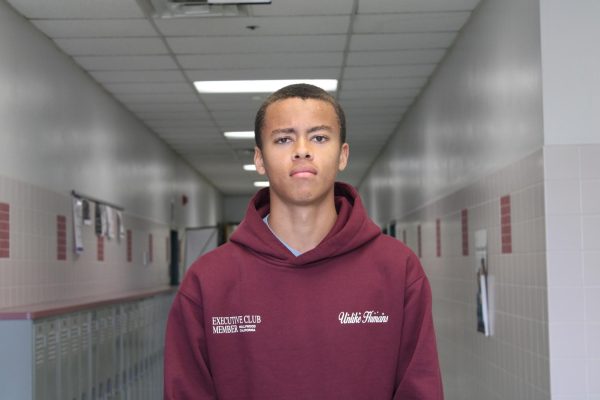
As many high school seniors turn 18 and become eligible to participate in this year’s gubernatorial election, students such as senior Yasmin Englin feel empowered to vote.
“I think that voting is kind of the same principle as buying from a corporation to support their cause, except it gives you a direct way to really show your voice,” Englin said. “I definitely try to keep up to date with who is running our government, what’s going on [and] the kind of issues people are talking about.”
Based on a survey of 101 people conducted among the CHS community through a Google Form in Sept, comprising both students and staff, 72.6% would vote for Democratic candidate Abigail Spanberger, indicating a large leftward bias.
“I kind of look for someone that’s gonna, like, work with both sides, because for anything to really get done, you want cooperation between both sides,” senior Jackson Fuller said. “ I think Sears and Spanberger are moderate right and moderate left [respectively], they’re not in the middle, but they’re certainly not extremists.”
By enrolling in courses such as Political Science or AP Government, seniors develop a stronger grasp of how elections function and the systems that shape them. These classes also help students stay updated on the upcoming governor’s race and the issues influencing it.
“As a senior, I take both Political Science and AP Comparative Government, and I’d always been interested in politics, but it has definitely changed the way I view local, specifically Virginia, elections,” senior Aarna Bhamidipati said.
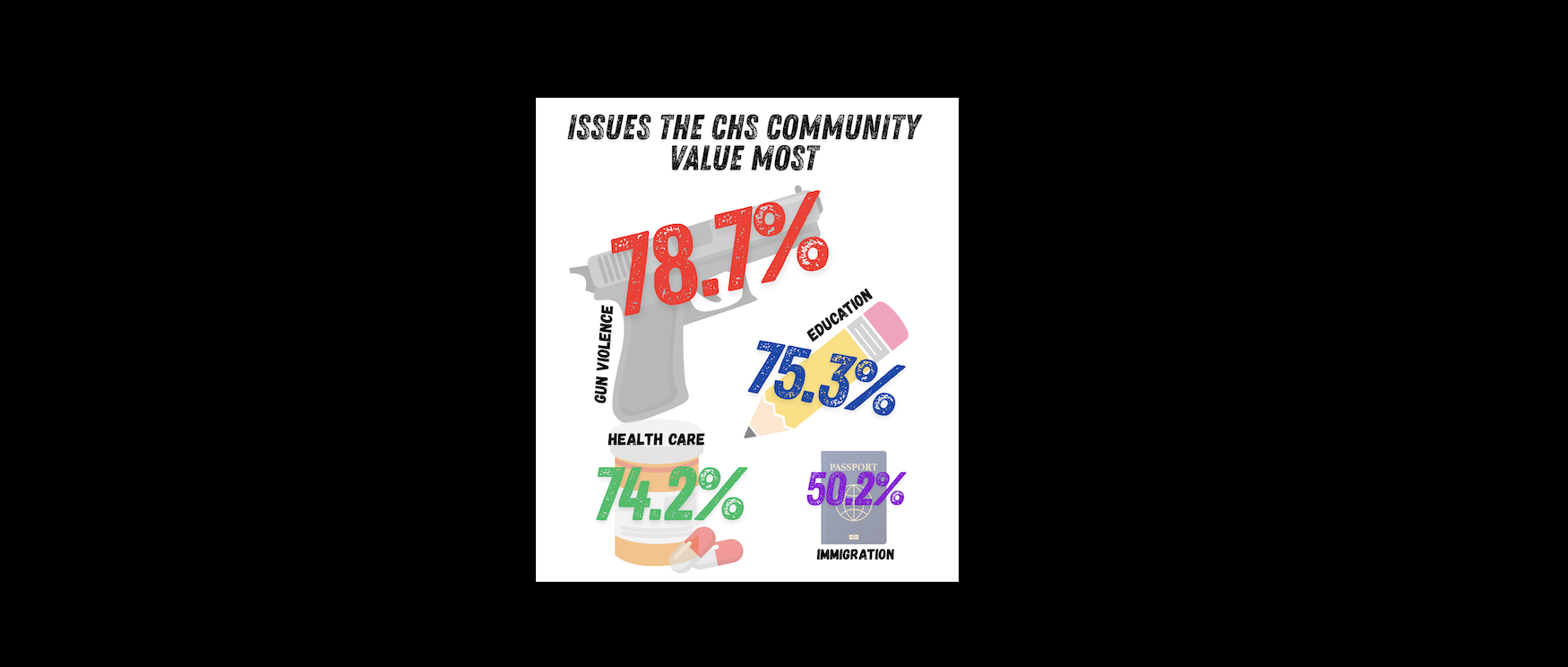
From gun violence to immigration, respondents could choose more than one issue they cared about when voting. According to the survey, issues CHS cares most about are gun violence, healthcare and education.
“As a student, I’m going to focus more on [education] and maybe talk about [education] more with my friends, whether it’s phone policies or restrictions,” Bhamidipati said. “Especially here in Northern Virginia, we’re known for a good education system, so I think it’s important the policies that they’re trying to play out and put into place.”
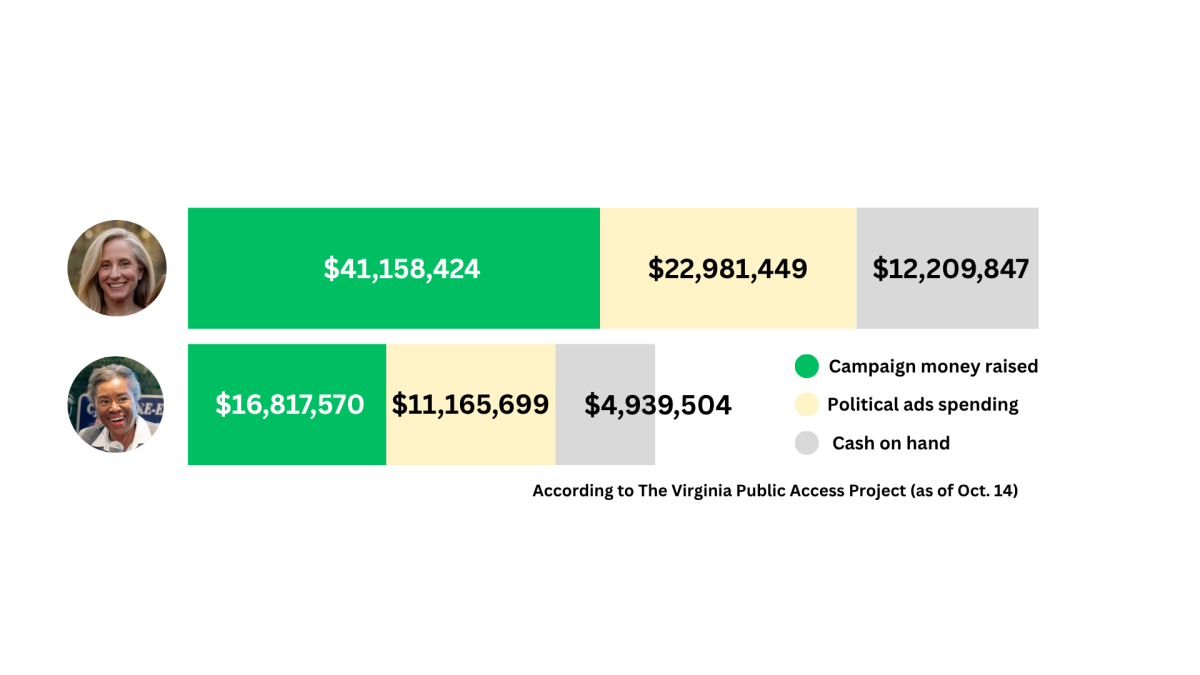
Although total spending so far is substantially lower in this Virginia election than the previous one, the gap between the two candidates’ spending is wide. In political ads for example, Spanberger’s $17.1 million spent far outpaces Earle-Sears’ $5.6 million.
“A lot of their spending now is done by what were called non-connected PACs, or non-connected committees,” social studies teacher Clement said. “Then you have ads that are produced by groups that aren’t technically connected to the campaign, but they clearly are in favor of one candidate or another.”
Whilst campaign expenditure and electoral success have a positive correlation, according to a study by Sage Journals, higher spending doesn’t always translate to election wins. In the 2021 gubernatorial race for example, Democrat Terry McAuliffe outspent Republican Glenn Youngkin’s campaign by a margin of $1.1 million, yet Youngkin won the election. Other factors such as party affiliation, gender and incumbency also play a role in election outcomes.
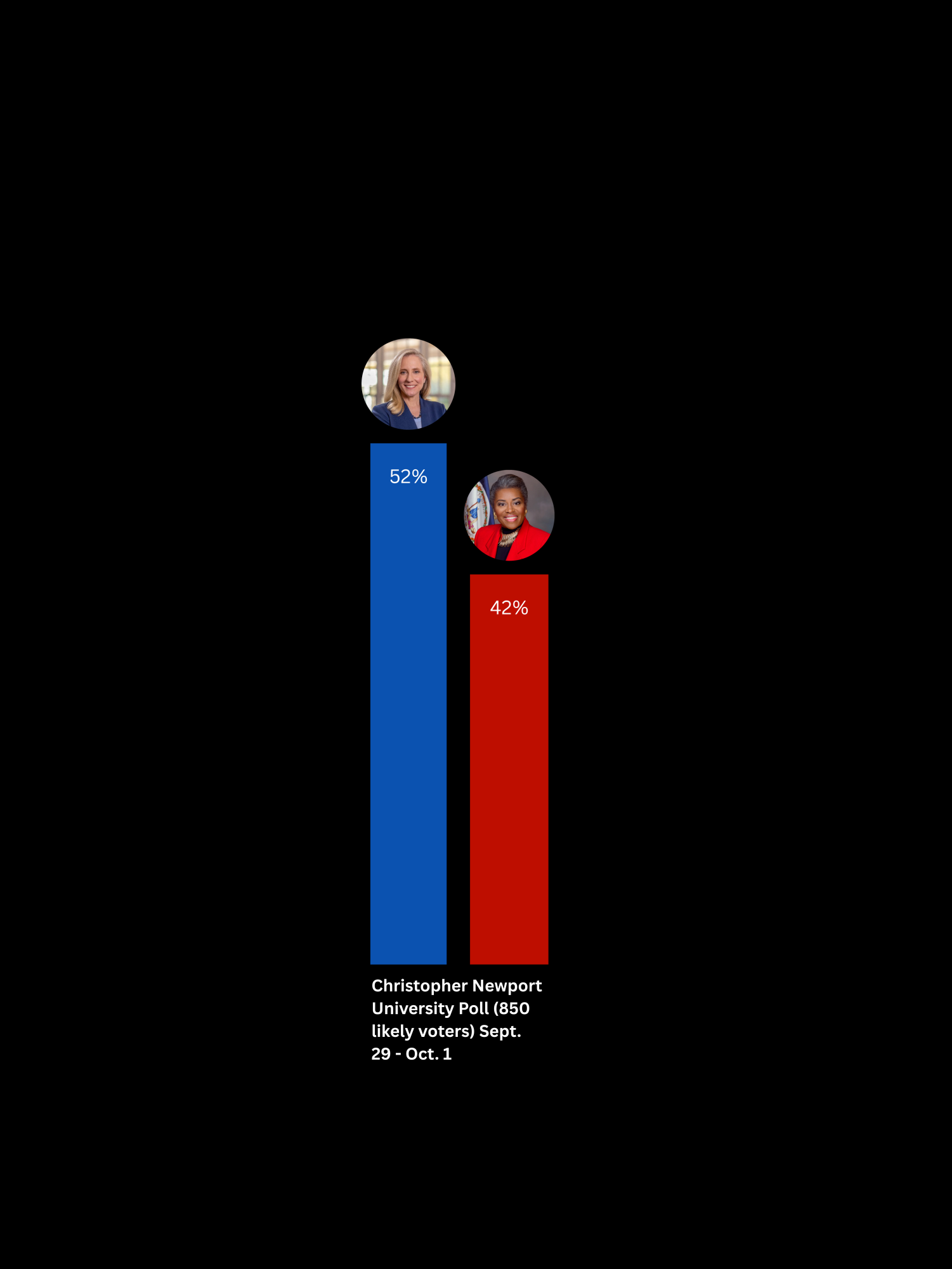
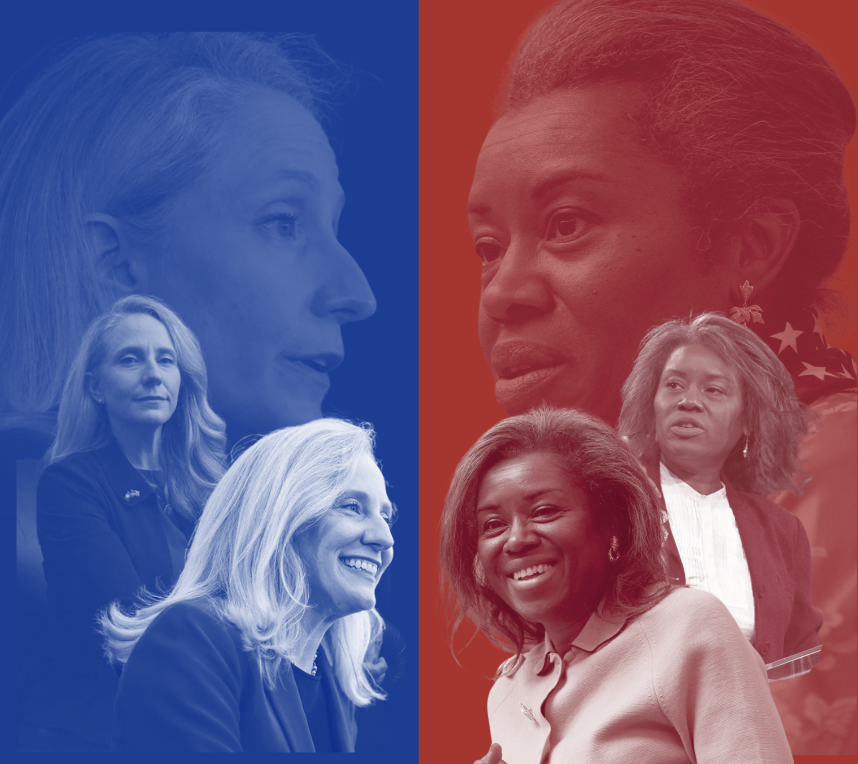
Winsome Earle-Sears won’t just be competing against her Democratic counterpart, Abigail Spanberger, when voters hit the polls on Nov. 4. The Republican candidate will also be staring down one of the most consistent electoral patterns in U.S. state politics.
“Perhaps the biggest worry Republicans have,” Dean of George Mason University’s Schar School of Policy and Government Mark Rozell said. “[Is that] historically, [in] the past half century, the party in the White House, with one exception, has always lost the Virginia governor’s race the next year.”
This trend was created by the unusual circumstances of Virginia’s gubernatorial election, which falls on an off year—a year in which there is neither a presidential election or a midterm election. Virginia’s status as a purple state has also influenced this tendency.
“Virginia and New Jersey [are] the only two states that elect a governor after the year [of] the presidential election,” Clement said. “Virginia gets a lot of national attention because it’s usually seen as a referendum on how the president’s first year has gone.”
Virginia’s trend also disregards the sitting president’s margin of victory in Virginia the previous year. Since 1977, Republicans carried Virginia in five of their presidential elections, with an average margin of 16.5 points—yet none of those presidents saw a Republican governor of Virginia elected during their term.
One possible explanation for this trend is the partisan mobilization hypothesis. According to the Center for Politics, “off year elections produce a shift in turnout in favor of the party that does not control the White House.” Turnout drops overall for off-year elections: in 2021, Virginia’s 54.9% turnout (a 15% increase on the previous year) was about 20% lower than the state’s presidential election turnout. However, in these off-year elections, turnout of voters aligned with the party not in control of the White House is historically higher. There was an error loading the selected infographic
Only one governor has defied this historical trend. Democrat Terry McAuliffe broke the 36-year-old streak with a win in 2013 under Democratic President Barack Obama—coincidentally enough, the U.S. government experienced a shutdown a month before Election Day that was widely attributed to Republicans.
McAuliffe also far out-spent his opposing candidate. Higher spending has historically led to higher success rates in elections, and thus far Spanberger has dominated in campaign spending and money raised. Earle-Sears’ lower amounts could make it harder for her to defy the Virginia rule.
Your donation will support the student journalists of Chantilly High School. Your contribution will allow us to cover our printing and annual website hosting costs.