
As parents scramble to find perfect gifts for their children with every company claiming they have the best deals, the holiday season can be the most stressful time of year. With the effects of inflation and tariffs, the dollar doesn’t go as far as it did last year.
The surge in consumer spending during the holiday season can reflect the status of the overall economy and reveal its weaknesses, according to Deloitte’s Holiday Retail Survey. As of September, the annual national inflation rate, or the average price increase of selected goods over one year, was at 3%, its highest since January, according to the U.S Bureau of Labor Statistics (BLS). Additionally, President Donald Trump’s installments of tariffs, which are taxes paid on imports, have led 77% of consumers to expect rises in holiday goods prices, according to Deloitte.
“Rising prices make it difficult to afford everything that you want,” economics and personal finance teacher Scott Loube said. “I think one of the problems is that prices have already risen and the bulk of the inflation has already happened, so it’s sort of a difficult situation because now we have to find out how to bring those prices back down.”
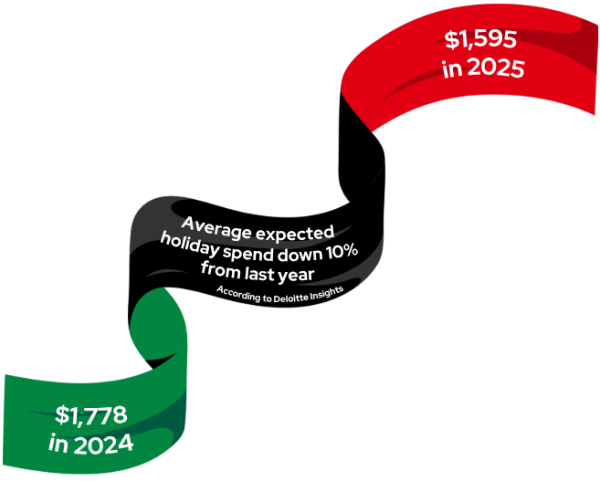
According to Bankrate, around two in five holiday shoppers expect higher prices on holiday gifts this year. For example, the average prices of recreational goods like televisions, toys, and sporting equipment, projected by Statista to be popular holiday gifts this year, have risen by 3% since July 2024, according to the BLS. In turn, holiday spending for the average consumer is expected to be $1,595, down 10% from 2024’s $1,778, according to Deloitte.
“I think as people are more aware of their purse strings tightening, they’re probably going to be more conscious about the ways in which they consume,” English teacher Stephanie Vu said. “Right now, there’s a trend online about de-influencing and I think that this is a symptom of people being aware that they’re being manipulated by larger corporations and companies to spend on things that they simply don’t need.”
According to the BLS, the Consumer Price Index, the prices paid by urban customers for a market basket of goods, in the DMV area has risen by 8.7% since January 2022 from 286 to 325, meaning the purchasing power of the dollar has decreased for all items for all urban consumers.

Ninety-five percent of Generation Z are more likely to seek deals and 74% are turning to social media for financial advice, particularly on budgeting and saving consistently, aiming to find ways to spend less this holiday season, according to Deloitte. For example, the practice of budgeting can significantly reduce wasteful spending and lessen stress over holiday shopping, according to the Oregon Division of Financial Regulation. Loube advises holiday shoppers ensure that retailers are being truthful about the deals and discounts they offer and that one is getting the best price possible, especially when shopping online on websites like Amazon.
“Deals affect the way that I approach my shopping because you can get more items and that way I can avoid steep prices,” senior Zach Schwartz said. “My mom will do that on things like eggs but also on gifts for sure.”
However, economists warn that consumers should remain aware of the manipulative tactics of retail companies when it comes to offering deals and discounts, according to PenFed Credit Union.
“I’ve noticed that companies are getting more gimmick-y and savvy with the way they market to people,” Vu said. “But I think to mitigate something like that, you can buy value sets and kind of split the value of the sets to gift and form your own bundles. I think that’s more thoughtful and more economical.”