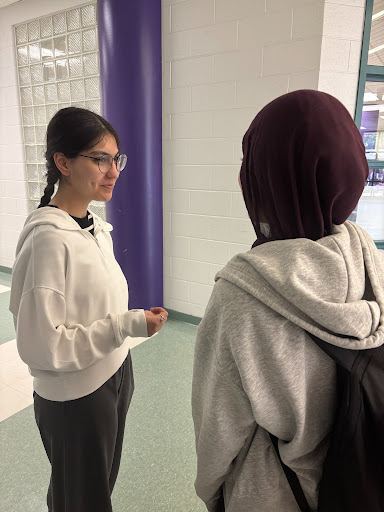

According to the National Library of Medicine, with cancer cases expected to exceed 27 million by 2040 worldwide, schools and organizations are expanding cancer education efforts. At CHS, students learn about the disease in health classes, while student organizations arrange awareness initiatives to support those affected.
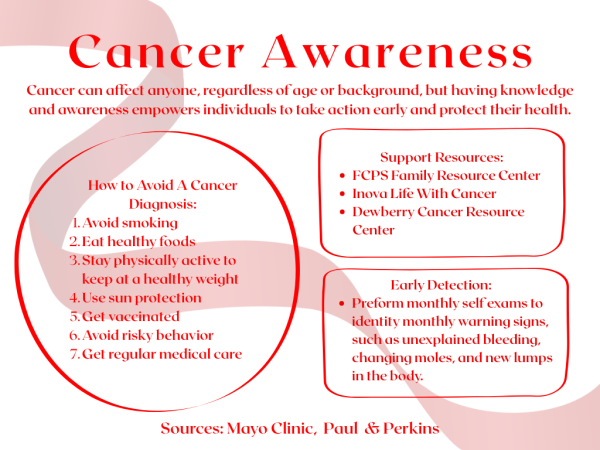
Cancer is a large group of diseases characterized by the spread of abnormal cells in the body and their uncontrollable growth, according to the National Cancer Institute. These malfunctioning cells ignore signals to die or stop dividing, allowing them to invade nearby tissues and possibly spread to other parts of the body.
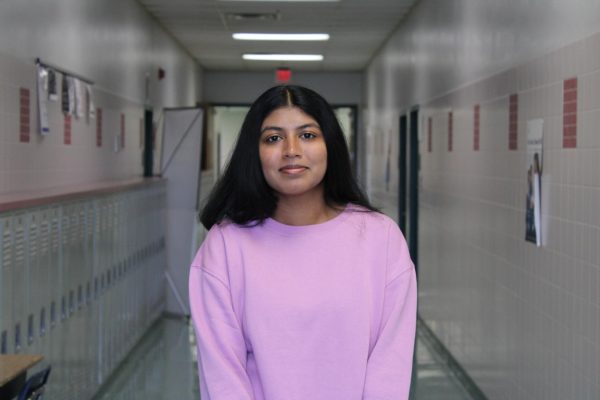
“Awareness helps people recognize the early warning signs, leading to an earlier diagnosis,” sophomore Pragna Tangirala said. “Sometimes, helping a peer that has cancer or has a relative with cancer bridges the gap between someone who has cancer and doesn’t.”
Tangriala knew teachers and family friends who have been affected by cancer, which has influenced the way she understands the disease and its impact on others. Teaching young adults about cancer can spread awareness by building knowledge about the condition which reduces stigma, fear and misinformation, according to UVA Health.
“When I was in elementary school I had this teacher, she had skin cancer and I didn’t know what that meant,” Tangirala said. “I only heard the word cancer, and I assumed [that] she may not come back. She ended up coming back and took the opportunity to teach us all about it. That made it interesting, because cancer doesn’t define one’s life, the way you view it does.”
According to the Cancer Council, cancer awareness goes beyond understanding what the disease is and how it develops. It also involves being mindful of the emotional, physical and social challenges which affected individuals face.
“My entire world changed when I was diagnosed with cancer, but nothing changed,” chemistry teacher Shaundra Riggleman said. “I was walking down the hallway thinking, I have cancer. Do I say this to people? Because when I tell people, some of them freeze and don’t know what to say.”
Riggleman was diagnosed with triple-negative breast cancer, and her story highlights the challenges faced by those affected by the illness. In response, student-led groups such as Women in Medicine, aim to acknowledge this by incorporating cancer awareness into their activities.
“With this club, there’s people of different backgrounds and experiences,” Women in Medicine president and senior Kira Stoll said. “Cancer awareness means different things to different people, whether they’re directly or indirectly affected. It’s really impacted the way we talk about cancer and take action by providing an actual opportunity for people to put their voice out there.”
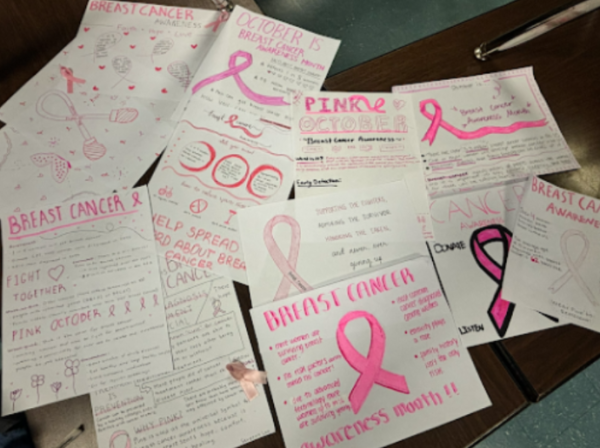
The Women in Medicine club plans to spread cancer awareness through meetings with guest speakers, creating lapel pins, posters and social media posts. They also aim to organize service projects and donation drives to support those affected by cancer.
“We’re going to see how that might pan out for this month,” Stoll said. “It’s hard because a lot of local organizations are closing due to political situations, which is surprising, but I think social media is a great way for us to reach out to this school and the community while putting our voice out there.”
While student-led groups raise awareness within the school community, information about support organizations and systems is available beyond CHS. According to the Louisiana Children’s Medical Center for Health, for individuals navigating a cancer diagnosis or who have a loved one dealing with cancer, knowing about support resources improves the experience.
“There were things I didn’t know about,” Riggleman said. “I had no idea that there was an organization called Life with Cancer, that there were support groups that were virtual. I still see these women that I’ve been talking and sharing experiences with, and forming these connections is important so you don’t have to do things alone.”
According to the American Cancer Society, finding support resources are important in order to improve quality of life and reduce distress when navigating a cancer diagnosis or treatment.
This emphasis of support systems is reflected in how students gather information about the disease, learning about cancer through sources such as family, friends and healthcare professionals as well as educational interventions in school, according to the National Library of Medicine,
“Cancer doesn’t care who you are,” Riggleman said. “When you’re young, the idea is you don’t need a lot of doctors, which is true. But having daily checkups and knowing how your body is and isn’t supposed to function so that, if something does go wrong, it can be caught for later, that’s important.”
According to Indiana University, regular cancer screenings should begin at around age 45 for colorectal cancer and age 40-45 for breast cancer, with earlier or more frequent screening recommended for those with higher risk factors such as obesity. New discoveries, early detection and improved treatment has changed the way people such as Riggleman live with a cancer diagnosis, according to the Wiley Online Library.
“For me [cancer] was the first opportunity that I’ve had to reflect and be away from teaching in 21 years and I missed it,” Riggleman said. “I think that was reflected by everyone when I came back, even though my job is tiring and even though my energy isn’t what it used to be, it’s worth it and I’m still enjoying it.”