
When the bell rings, most students pack up and head to a new classroom. However, some students attend extended courses that meet for two periods, either on alternating days or in back to back sessions. Double block classes at CHS expand one subject across additional class time, this changes the pace and structure of the school day.
Robotics
Scheduling structures for double block classes differ by class, with some meetings at the same time each day and others scheduled for two consecutive periods every other day. Robotics is one of the classes that requires students to double block, and students take the class in consecutive periods. The course covers electrical and electronic systems, computer technology and basic engineering principles.
“It’s a really fun class and the workload isn’t a crazy amount of work. Most of the time we can get it done in class; I recommend the class if robotics is in your career path,” junior David Tchommo said.
Robotics prepares students for technical and engineering fields where problem-solving and troubleshooting are required. Along with developing hands-on skills, students collaborate to design and build functional systems
“Since there’s longer class periods we get a lot of time to work together on projects since it’s hands-on stuff,” Tchommo said.
Veterinary Science
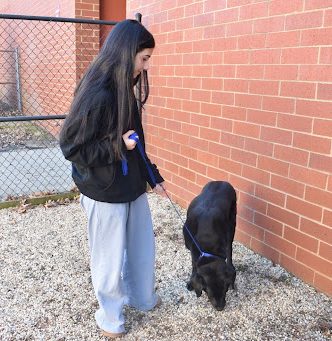
As another double block course, veterinary science focuses on animal anatomy, behavior, nutrition, disease pathology, sanitation and disease control. The class includes hands-on activities, such as handling and restraining dogs and cats as well as performing basic grooming tasks. Veterinary science is scheduled as a daily double block, allowing students to engage with the subject every school day.
“I don’t really mind giving up my homeroom. I really like having this class everyday it’s like one of my favorite classes,” junior Camilla Rodriguez-Marrero said
The class combines classroom instruction with laboratory practice during the same period. Students learn about careers in veterinary medicine and animal care, including positions such as veterinary assistant, veterinary technician and animal care specialist. Through these lessons and lab work, they practice skills used in a professional animal care environment. The class also allows students to earn industry credentials specific to veterinary care, such as the veterinary assistant certification, after completing 36 weeks of CTE courses in FCPS.
“We get to groom dogs and practice how to do clinical procedures and learn about animal anatomy, ” Rodriguez said. That’s basically what we do in almost every class”
Students also study how veterinary clinics operate, including client communication and basic record keeping. During lab activities, they practice clinical procedures similar to one that are performed in vets.
Pharmacy Technician
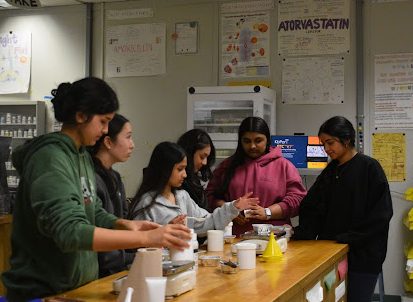
(Amanda Yesin)
The double block course offered through CHS Academy meets daily focuses on pharmacy practices, including sterile and non-sterile hands-on learning and inventory management. In the class, pharmacy technician students learn to prepare medications, maintain patient records and work with pharmacy-related work.
“Having pharmacy tech every day as a double block means we spend a lot of time working through assignments in class,” senior Aanya Gupta said. “The curriculum follows professional standards; students must master detailed procedures and accurate documentation.”
The extended class time allows instructors to guide students step-by-step through technical processes that require precision and careful attention. Coursework aligns with requirements set by the Virginia Board of Pharmacy and prepares students to take the ExCPT Pharmacy Technician National Examination.
“I also wanted to do pharmacy tech because it gives a certification when you finish the class. Gupta said. “That’s why I didn’t care if I gave up one of my classes.”
Double block classes give students more time for career-oriented learning. Offerings include robotics, veterinary science, pharmacy technician and other double block classes in engineering, health sciences and technology. While the schedule may require giving up a homeroom or another class period, the format allows students to focus on one subject and complete projects or lab work that can be challenging to fit into a single period.