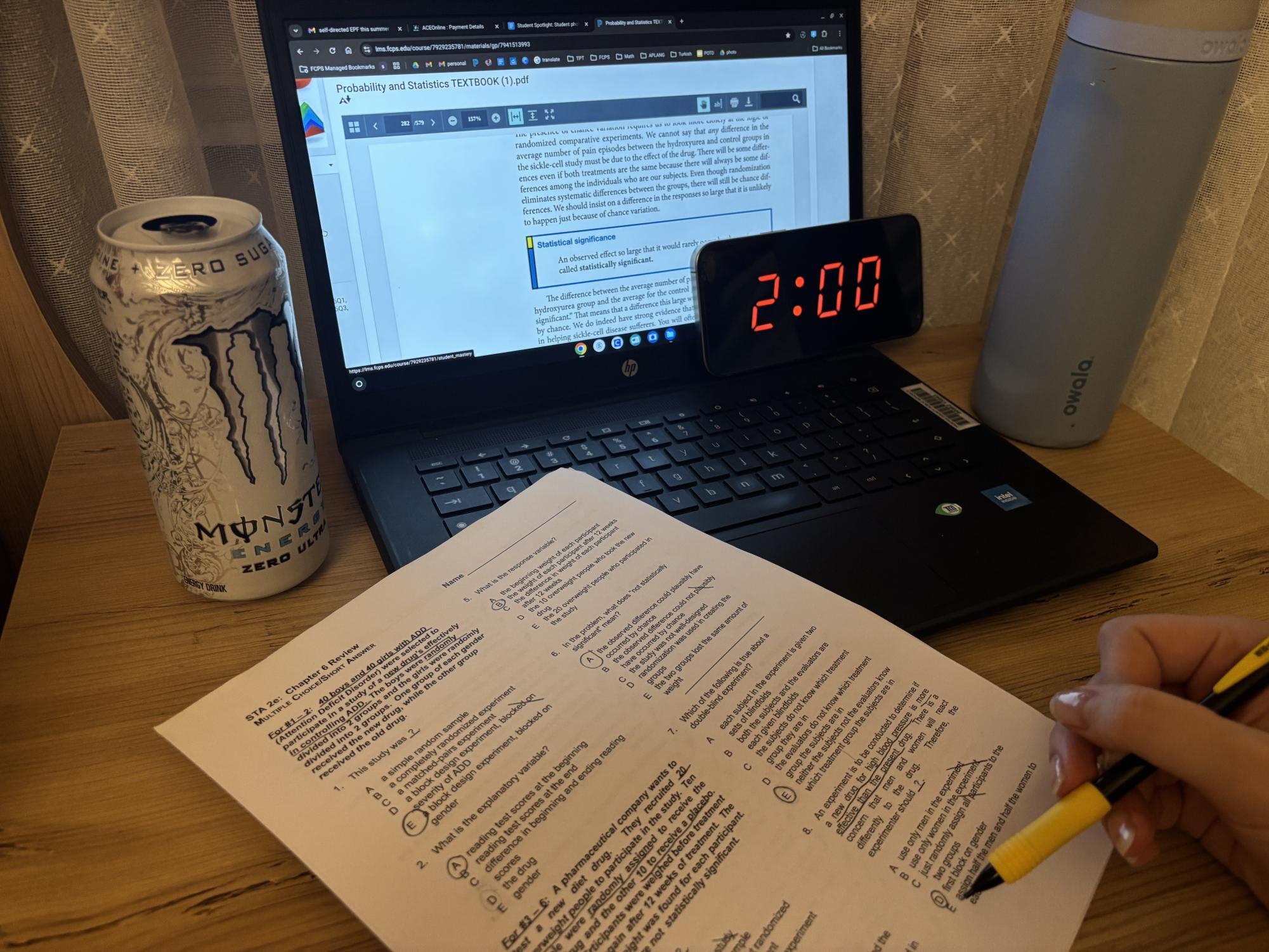
It’s two in the morning: bedroom lights glow and notebooks lie open while a student scrolls through flashcards for an exam. Staying up all night may feel productive, but it often leaves students exhausted the next day.
Many students pull all-nighters to study for exams, finish homework or meet school deadlines. Pulling an all-nighter consists of staying awake all night and going about the next day as normal. However, skipping sleep can make it harder to think, remember information and focus. After 17-19 hours without any sleep, reaction time can be similar to having a blood alcohol concentration (BAC) of 0.05% showing noticeably slow reflexes.
As stated by the National Library of Medicine, during exam periods, the amount of sleep students get is often lower the night before a test. In one study, sleep duration dropped by up to several hours and more than 10% of students did not sleep at all. However, all-night study sessions hampered performance and more sleep was correlated with higher test scores.
Sleep is critical because it supports both physical and mental development. During sleep, the heart and vascular system recharge, hormones are released and the immune system works to protect the body from disease. Sleep also strengthens learning, memory, concentration and attention, skills students rely on every day in school. Feeling tired and unfocused, students can struggle to pay attention and might perform worse in class, making all-nighters counterproductive.
Chronic sleep loss in adolescents disrupts brain and body development by affecting emotional regulation and cognitive control according to the National Library of Medicine. Changes in sleep patterns make teens more vulnerable, increasing risks of anxiety, suicidal thoughts and risky behaviors. During adolescence, REM plays a key role in regulating emotions by connecting the limbic system, which is important for emotional regulation during sleep.
According to News In Health, different stages of sleep, including deep sleep and REM, stabilize memories. Sleep also processes emotional memories, which can improve focus and problem-solving. Students benefit most from the sleep after studying, as it cements information. Cutting sleep short reduces these benefits, making late-night cramming less productive and more harmful to long-term learning.
All-nighters rarely improve academic performance because exhaustion reduces focus, memory and critical thinking skills. Many students lack enough time during the day due to schoolwork and other responsibilities. Instead of increasing productivity, sleep loss often leads to careless mistakes and recall information the next day.
When teens don’t get enough sleep, the effects show up quickly. According to the Sleep Foundation, memory and attention decline, homework takes longer and reaction time, judgment and alertness suffer. Many teens already fall short of recommended sleep on school nights, as early school start times, extracurricular activities, jobs and hours of homework limit rest. As a result, students may feel daytime sleepiness, struggle academically and see their grades drop.
Choosing sleep over an all-nighter is the smarter and healthier decision. A full night of rest strengthens memory, improves focus and helps the brain properly store information learned during the day. With better energy and mood students are more prepared to succeed academically.