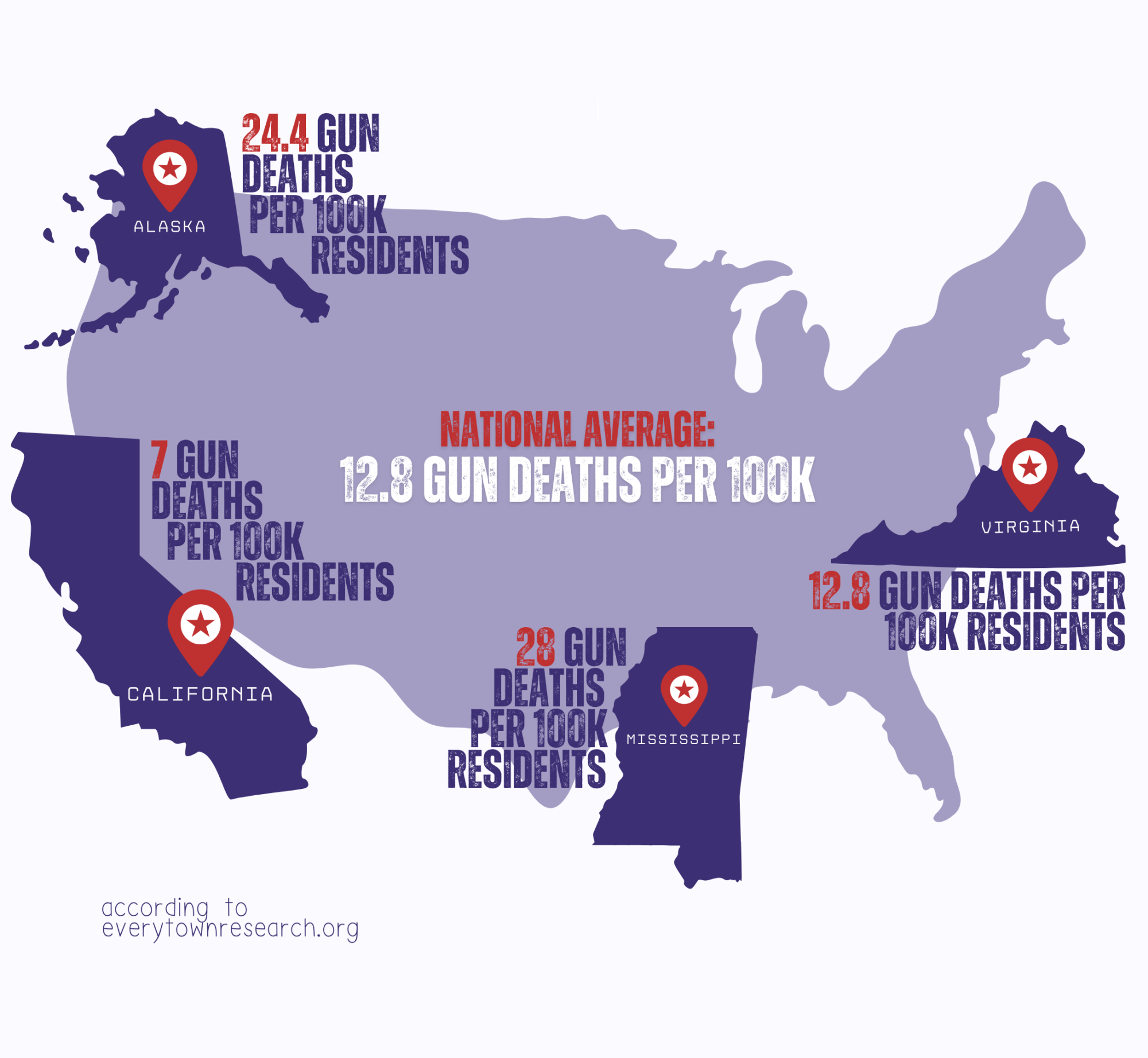
Firearm-related injuries surpassed vehicle crashes as the leading cause of death for Americans ages 1-19 in 2020, with gun deaths exceeding 44,000 in the U.S. in 2024.
The U.S. is one of just four countries globally to mandate the right to bear firearms in its constitution. Yet, instead of prioritizing policies protecting the safety of bystanders, the U.S. has some of the loosest legislative controls regarding gun ownership among the world’s developed countries and the highest number of school shootings recorded between 2009 and 2018.
In April, Virginia Governor Abigail Spanberger signed multiple gun control bills passed by the General Assembly into law. This statewide legislation is a highly necessary step toward preventing gun violence in Virginia, progress that has not been seen since 2021 under Democratic Governor Ralph Northam.
The recent legislation passed includes House Bill 40, which bans the manufacture, possession and sale of plastic or unserialized firearms—known as “ghost guns” due to their difficulty to trace. Additionally, House Bill 217, approved by Spanberger on May 14, bans the purchase and sale of “assault firearms” beginning July 1. The bill defines assault firearms as any semi-automatic rifle or pistol with military-style features, such as the capacity to hold and fire over 15 rounds (bullets). Prior to this adjustment, Virginia firearms could have the capacity to fire 20 bullets before being classified as assault firearms.
Despite their good intentions, these technical definitions, which classify a 15-round weapon as acceptable and a 16-round weapon as illegal—despite the two firearms having virtually the same lethality—are only one instance of the loopholes and limitations of gun policy. Grandfather clauses, protections for hunters and exceptions for antique firearms ultimately prevent even the most sweeping statewide gun control legislation from being airtight.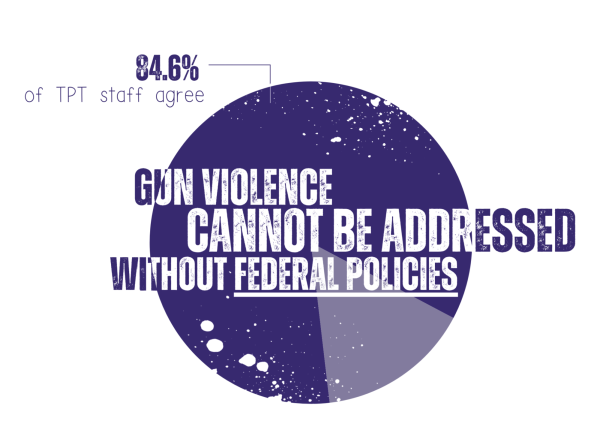
Perhaps the largest “loophole” is the blatant federal protection for American gun culture. With the right to bear arms enshrined in the Constitution, it’s difficult for state governments that want to pass gun violence prevention legislation to do so without encountering pushback grounded in the Second Amendment. In fact, the National Rifle Association filed a lawsuit the day Spanberger approved the ban on assault firearms, claiming that the ban was a violation of Americans’ constitutional rights.
Virginia lawmakers should acknowledge the progress made by the recent legislation; however, these acts cannot be treated as the finish line. Current policies should not be treated as “good enough,” as many states including Virginia lack critical policies that regulate the open carry of firearms, prevent guns in bars and require a permit for handgun ownership.
In today’s national political climate that tends to favor gun rights over regulation, individual states should continue supporting gun control policies and address root causes of gun violence, such as socioeconomic inequities and mental health challenges. However, state and national governments must recognize that nationwide reform is the most effective way to standardize gun safety across the country. 
Policymakers have the responsibility to ensure that safety from gun violence does not depend on zip code, as the gun laws and corresponding levels of gun safety vary significantly across the country. Simultaneously, residents can engage in both state and national-level grassroots advocacy to lobby for universal background checks and stricter safe-storage laws.
While statewide policies are a step in the right direction, a single state cannot be expected to protect its residents alone from a national crisis without federal support. The nation’s founders couldn’t have anticipated that the right to bear arms would become complicit in today’s headlines of mass shootings and a generation being raised on lockdown drills, but present-day lawmakers must confront this reality in order to chart a path toward lasting reform.