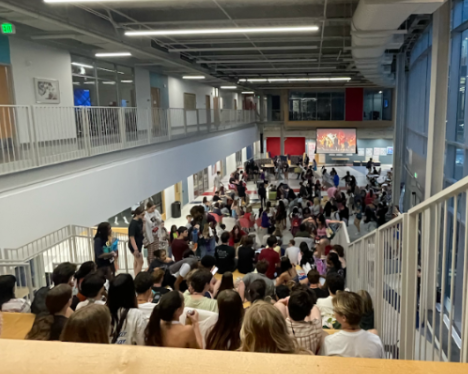



After months of internal planning, FCPS unveiled its next steps in taking the district into the AI age. On Nov. 3, the district hosted FCPS Forward: AI & The Future of Learning, an event announcing its partners, Google and Playlab, for their AI literacy initiative, Meeting the Moment.
“We want to have strong industry partners that are committed to privacy and also protecting student data,” Superintendent Michelle Reid said. “We want to make sure that the tools we use are safe and that we have appropriate safety guards in place.”
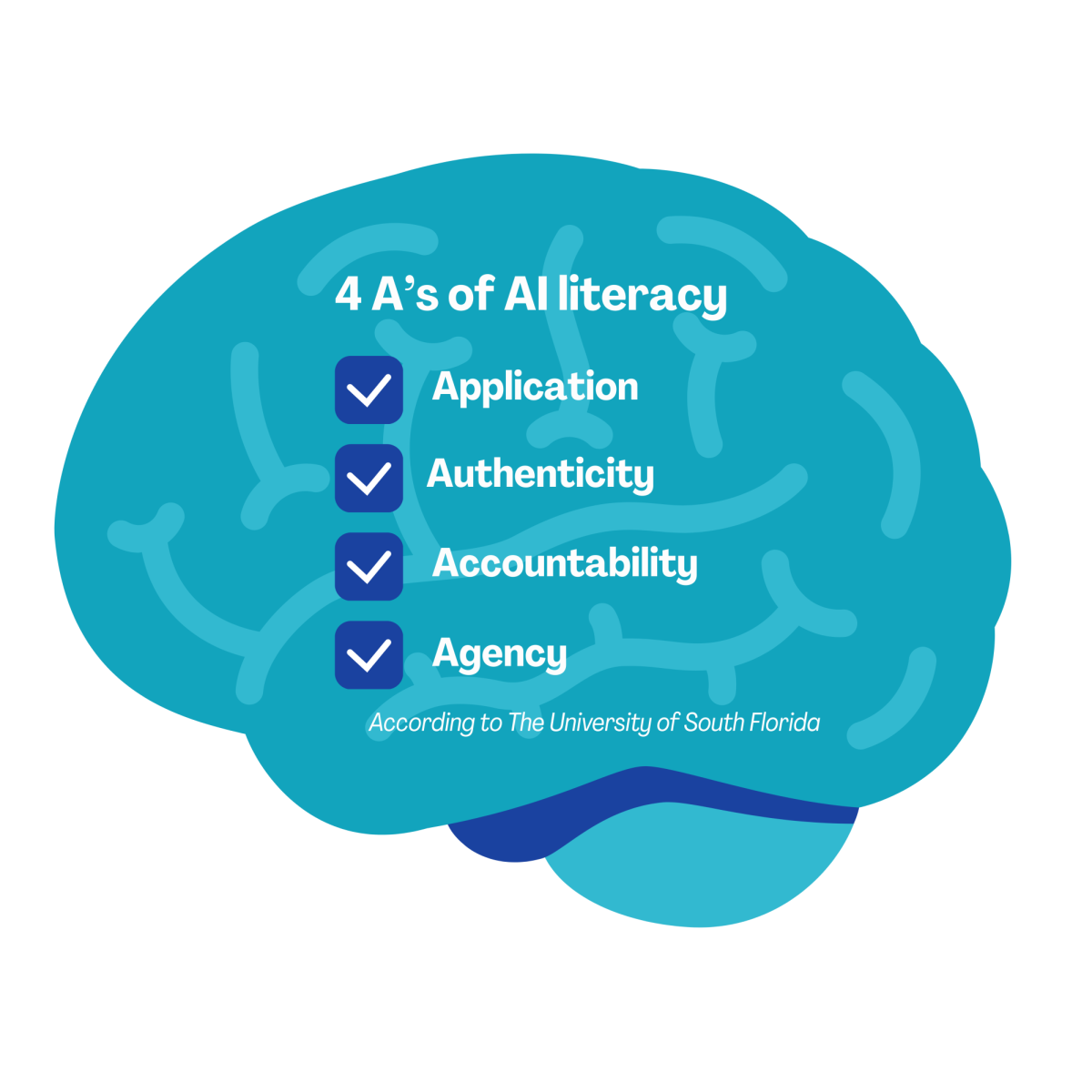
The University of South Florida defines AI literacy as a set of skills that lets individuals critically assess AI technologies, collaborate effectively and use AI as a tool. Playlab, assisting the district in developing this competency, is a nonprofit platform helping educators and students create AI tools in the classroom without needing to code.
“FCPS’s student initiative is the largest AI literacy program that we’ve seen a district do,” Playlab Head of Strategic Partnerships Hilah Barbot said. “Y’all should be very proud you’re leading the way.”
Over the course of two years, 15 schools have participated in the FCPS Lighthouse Schools program, a pilot program with a group of chosen schools to test new technology and teaching strategies, including AI, before districtwide implementation. In 2023, the program partnered with the International Society for Technology in Education (ISTE) and the Association for Supervision and Curriculum Development (ASCD), both nonprofits assisting educators to safely and responsibly use AI in learning. In January 2024, the program announced its first cohort of seven schools, followed by its second cohort of eight schools in August.
While there is no set date for district implementation, Technology Innovation Partner Summer Johnson’s work focuses on planning and implementing current pilot testing in Lighthouse Schools.
“We use the human-centered design process so that we’re trying new tools and making sure that our end user, whether they be a teacher or student, is getting the right output from the tools that we’re using,” Johnson said. “[Lighthouse Schools] learn how to test and pilot things. They set their own goals and their own kind of plans that they want.”
In addition to Playlab, the initiative uses Google’s generative AI chatbot, Gemini. Staff can use the chatbot’s features to receive feedback on lessons and create plans, including asking Gemini to write a storybook. Schools across the district have Gemini Advanced, another level of the tool woven into Google apps like Gmail, Docs and Sheets as an integrated assistant to brainstorm ideas, along with access to NotebookLM, an AI research assistant. Additionally, students are being introduced to AI. Fifth and sixth-graders at Cub Run Elementary School have learned to use Adobe Express, employing writing descriptive language to generate an AI-portrait of themselves.
“A lot of school districts are starting with teachers and doing AI literacy for teachers first, and then maybe some small student pilots, but they’ve been more reticent to just let students lead,” Barbot said. “I would say [FCPS] has been really cool because they were like, ‘students are going to figure this out faster than any of us, so let’s give them the wheels and let’s let them go.’”
Teachers can also get ISTE certified, a digital credential demonstrating mastery in technology usage, while adhering to ISTE Standards that emphasize strong pedagogy rather than specific tools. In addition, teachers can get benefits including the eligibility for four graduate credits, a year of ISTE membership, access to an exclusive educator community, support for effective tech integration and recognition as a technology leader at the ISTE+ASCD Conference.
Students also have specific guidelines for AI usage. According to FCPS’s Students’ Rights and Responsibilities document, students may use generative AI tools as long as they check with their teachers, properly cite sources and follow the honor code.
“I think AI is a really helpful tool,” senior Ayush Katpally said. “You can use it to assist you with assignments, but not use it fully to complete your assignments. I really think that implementing AI with students’ lessons and just teacher lessons in general can help improve educational outcomes on tests and assignments.”
According to Goldman Sachs, generative AI could replace up to 25% of work and around 67% of present jobs are affected by AI modernization. For the district, numbers like these indicate why AI literacy has become a priority.
“Seventy percent of employers would rather hire someone that has AI experience than just experience; it’s a powerful data point,” Reid said. “I know our students and families definitely want to have their students have a solid experience with AI so they’re going to be able to make those moves when they leave us.”
Beyond the application process, colleges face a new challenge: preparing students for a job market increasingly shaped by AI. When AI first emerged, educational institutions focused on limiting the use of AI to cheat. While that problem hasn’t gone away, the focus has shifted.
Fourteen percent of college instructors agree that they feel confident in their ability to use AI in their instruction, per an Ithaka S+R study. Additionally, 58% of students surveyed by Campbell University do not feel they have sufficient AI knowledge and skills.
“It’s definitely a concern,” Katpally said. “I know that I’m going to [study on] the science side. So right now, I know many of my friends don’t think that research will be taken over by AI, but I definitely think I can use AI to help advance research. So yeah, I’m learning how to use and develop AI and other tools related to AI.”
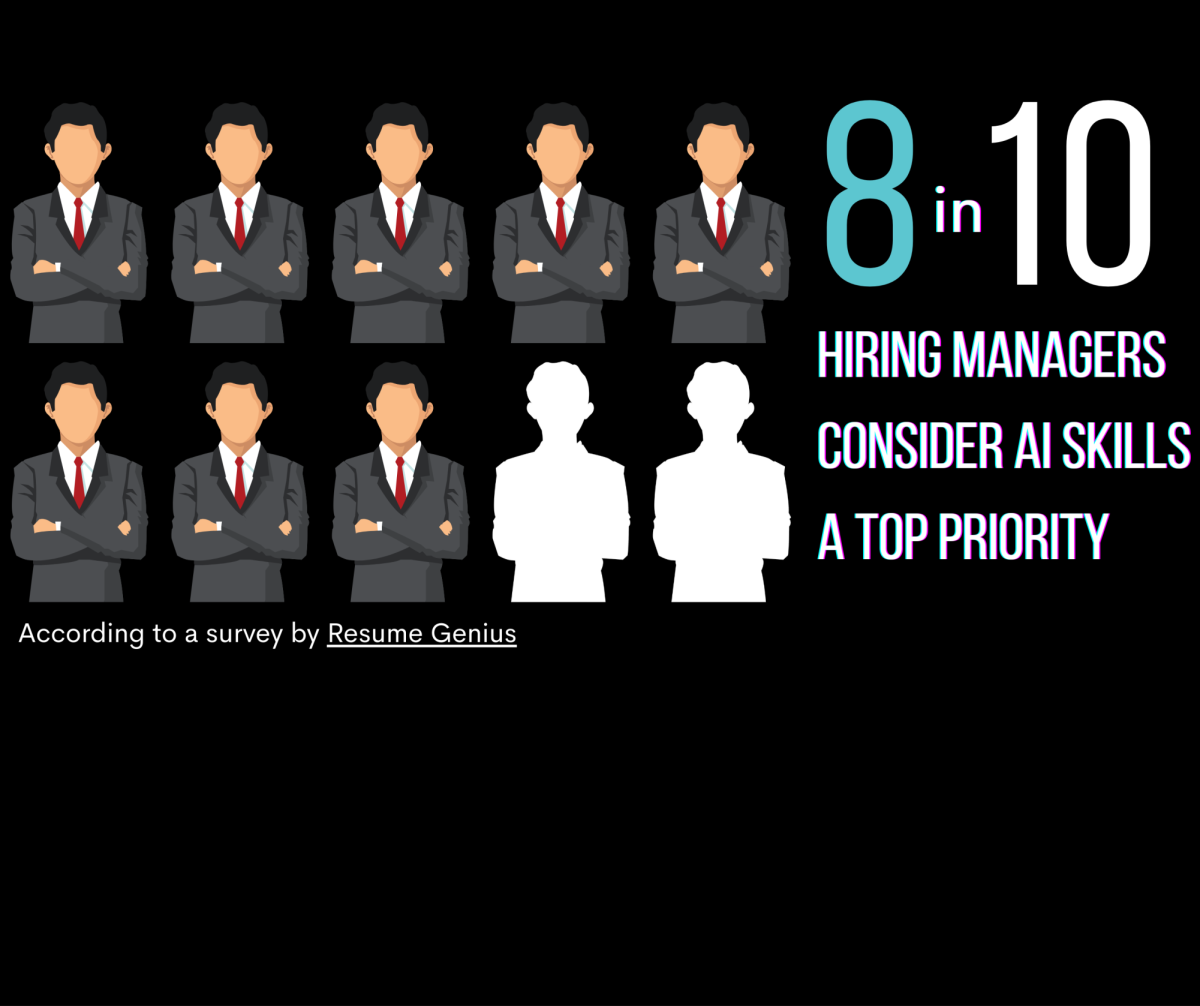
At the same time, AI skills have risen higher in an employer’s priorities. A survey by Resume Genius of 1,000 hiring managers throughout the United States found that 81% considered AI skills a hiring priority.
“None of us know what AI is going to be capable of next year or five years from now,” Herrington said. “When employers are making a commitment to hiring an employee, the biggest thing they want to know is that that employee is going to be willing to adapt and evolve and learn with them.”
Like with college applications, companies and job applicants have turned to AI for screening applicants. Eighty-eight percent of companies already use some form of AI for initial candidate screening, according to the World Economic Forum. Moreover, the 2025 Market Trend Report from Career Group Companies found that 65% of job applicants use AI in some part of their application. AI tools, as well as job search apps like Indeed and ZipRecruiter, have made the job application process more efficient.
“On the other hand, it’s also introducing a lot of noise into the market, because now it’s lowering the cost to apply to any particular job,” Herrington said. “When [companies] get hundreds or thousands of applications for a job, what makes a difference is if somebody says, ‘Oh, yeah, I know that person, and I think we should talk to them.’ It’s almost ironic that AI has made it more valuable than ever to build personal, non-technological relationships.”
As students look ahead, many realize the knowledge of AI skills isn’t optional anymore. Graduating students are about to walk into an unprecedented job market.
“It’s inevitable, because obviously AI is the future, and AI is definitely going to be part of every single field in the future,” Katpally said. “I think whether you’re in business, medicine or even literature, having AI as a skill in your developmental set is a pretty good way for you to be prepared for any challenges that arise.”
Your donation will support the student journalists of Chantilly High School. Your contribution will allow us to cover our printing and annual website hosting costs.