
While registering for the regional science fair, I came across two mandatory dropdowns that made me pause: race and ethnicity. After selecting “Asian” for race, I studied my relevant “ethnicity” options, for I could only select one: “Indian,” “Korean,” “Multiracial,” “Asian/Pacific Islander” or “Unknown/Prefer not to say.”
My grandparents immigrated to the Midwest before my parents were born. My dad’s parents came from South Korea while my mom’s parents moved from North India. As a result, my sister and I grew up with both Indian and Korean influences, from celebrating Diwali every year to learning how to make Korean gimbap at home.
At school, especially upon learning my Korean last name, people started asking the question: “What race are you?” My simple answer was “Asian,” but that satisfied no one, least of all myself. When I did explain my background, some people would respond, unaware that South and East Asian were grouped under a single race, saying “Oh, so you’re biracial,” yet on paper, surveys considered me simply as Asian.
Granted, agencies like the U.S. Census have made notable improvements in addressing ethnic nuance in the last couple decades. While South Asians were once inaccurately counted as everything from “Hindus” to “White” to “Other,” the census now allows Asian respondents to select from six different Asian groups, as well as write in a specific group. In 2000, respondents were for the first time able to select more than one race to describe themselves and in 2024, “Middle Eastern or North African” became its own category, helping address at least one area of confusion.
However, outside of the census, that distinction often disappears. Many school surveys and application forms condense the many backgrounds of South, East, Southeast and Central Asia—from Korea to India to the Philippines to the Maldives—into the broad label of “Asian.” Yet, Asia’s different regions are not only geographically expansive and diverse, but contain immense linguistic, physical and cultural diversity, which I experienced firsthand while visiting family.

When I first traveled to South Korea at 7 years old, I remember visiting Seoul, a metropolis with both modern buildings and traditional wooden teahouses, advertised by large, bright signs covered in Hangul (Korean alphabet). Making use of the advanced public transportation system, my family went to Bukhansan National Park, which, despite bordering the city, was surrounded by mountainous landscapes, colorful paper lanterns and Buddhist temples along hiking paths.
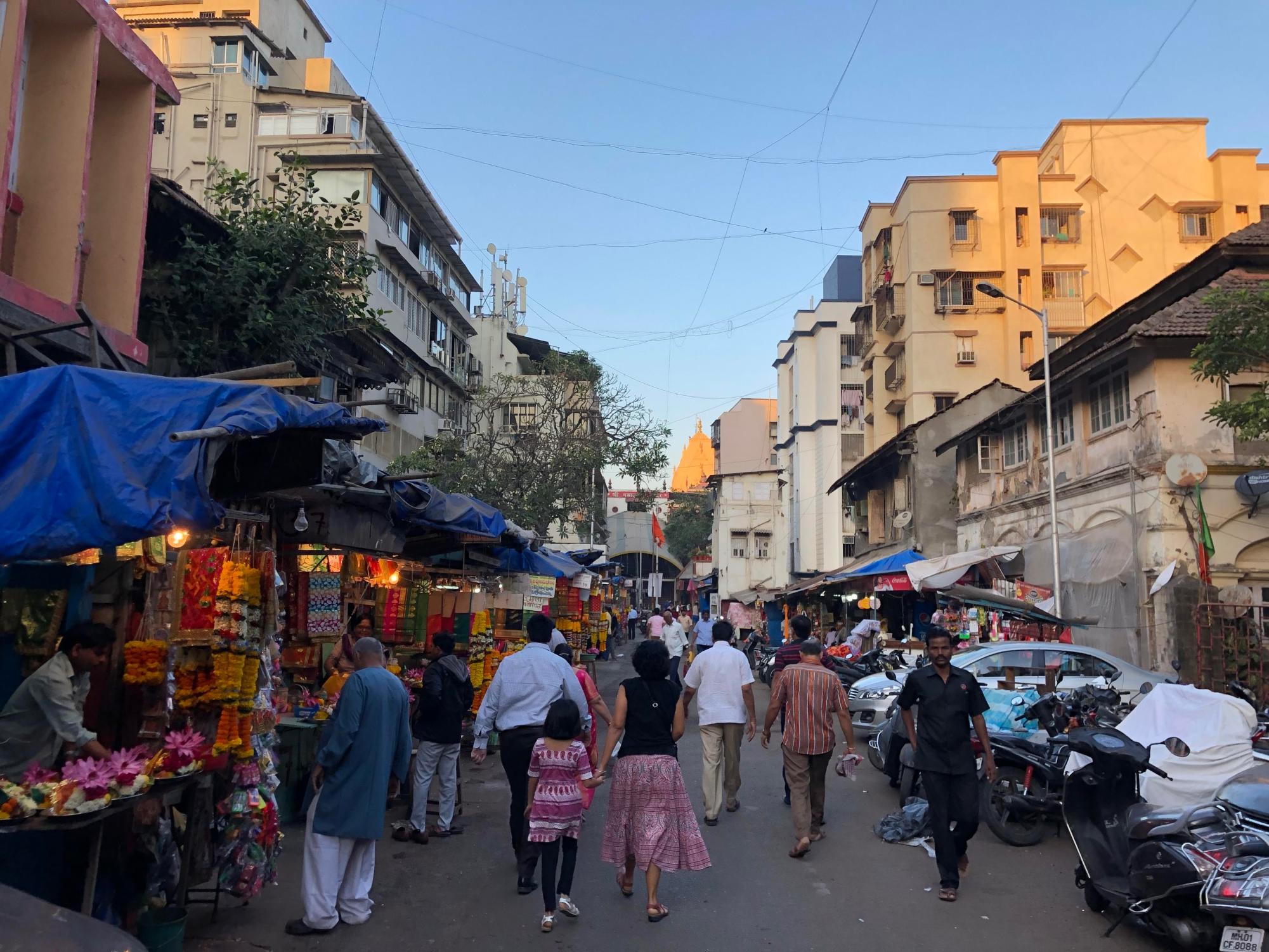
Two years later in India, I recall walking along the traffic-heavy streets of Mumbai, full of cars, motorcycles, rickshaws and people; some in casual clothing, others in more traditional attire. Sidewalks were lined with vendors bartering with buyers in Hindi and Marathi, selling flower malas (garlands), colorful shawls and purses threaded with small mirrors and beads. Not far away from the organized chaos, the Gateway of India overlooked the Arabian Sea, reflecting an architecture style blending Hindu, Muslim and British influences.
The “Asian” label could not capture the vibrant yet distinct experiences I had when I visited the two countries, and certainly could not encapsulate the diversity of the entire continent. I didn’t return from the trips thinking I had experienced Asia, only two pieces of it.
However, I became aware of a concerning societal misperception that “Asian” solely means “East Asian.” For instance, a Google search for “Asian restaurants” gives me a list of places to get ramen (Japanese), boba tea (Taiwanese) and sushi (also Japanese).
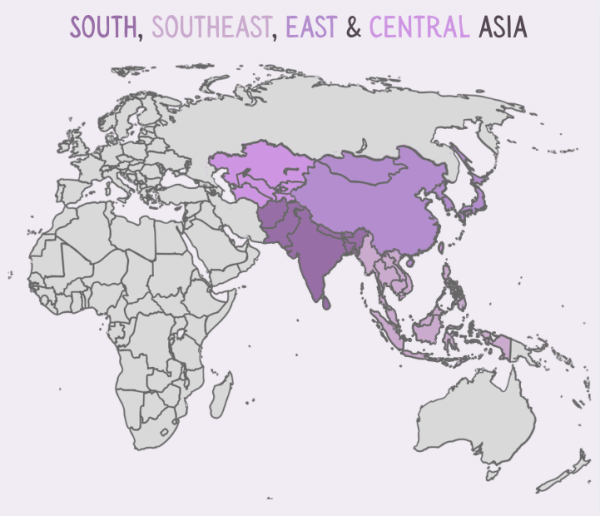 Historical high rates of East Asian immigration to the U.S. starting in the late 1800s contributed to these misconceptions and skewed the representation of Asian identity in popular culture, which largely features K-beauty trends, lolita fashion and anime. These portrayals shape how society perceives Asian identity, and while not inaccurate, they are abysmally incomplete and enable more harmful stereotypes like the model minority myth. As a result, even though on paper, my Indian background is considered Asian, studies indicate others are less likely to view South and Southeast Asians as “Asian Americans.” Even within the group, South Asians are only considered Asian by 67% of Asian adults in the U.S., and Central Asians are only considered Asian by 43%, compared to the 89% who view East Asians as Asian.
Whether through categories or cultural stereotypes, reducing these communities into a single “Asian” narrative also risks failing to capture distinct socioeconomic realities and discrimination. After the tragedies of Sept. 11, 2001, South Asian communities in particular faced increased hate crimes and prejudice, while during the COVID-19 pandemic, East Asians, especially Chinese Americans, experienced widespread public distrust, sparking the Stop Asian Hate movement.
I don’t reject the term “Asian”—on forms, that is what I identify as—but I recognize it as a broad, imperfect category that fails to tell the entire story. Of course, we still need a way to categorize ethnicity, and eliminating the distinction would only ignore the reality that historical discrimination continues to have implications on minorities today. However, data-collecting institutions can offer more detailed options in surveys and research how different communities identify themselves. At the same time, as a society, we must recognize the limits of the label in order to understand and appreciate the full extent of who it represents.
as