Some seniors have already received their rolling admissions decisions. With the average student at a U.S. private college paying up to $45,000 a year in tuition and fees, families are now starting to discuss a defining part of American education: paying for college.
According to the Education Data Initiative, the U.S. is home to the most expensive average college tuition in the world. The average annual tuition for an American bachelor’s degree from a public university was $9,596 in 2022-2023, nearly $4,000 higher than the second-most expensive country. This cost is the result of numerous factors, including the fact that less U.S. tax revenue goes toward funding public universities.
Because of these prices, attending college in the U.S. can be a source of heavy financial pressure on students and their families. A survey from the University of Chicago indicates that 75% of Americans believe cost is the biggest barrier to seeking a higher education.
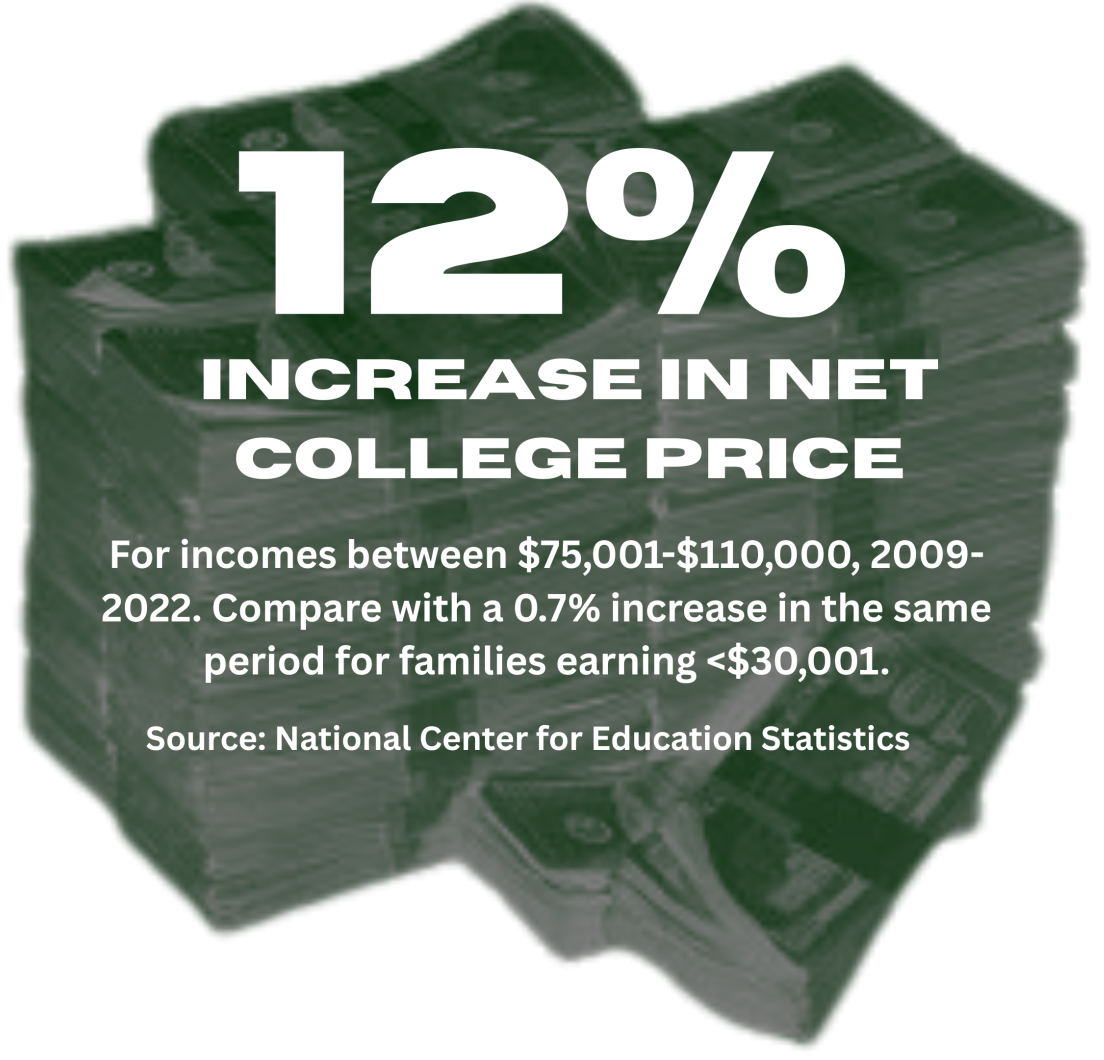
Those with higher incomes receive less financial aid, but are also more likely to be able to pay for college. Low-income applicants face many barriers to higher education including not having as much money to spare, but colleges’ financial aid offices pay for more of their education.
Middle-class families receive the worst of both worlds: they don’t have enough money to pay for college up front, and they don’t demonstrate enough need to receive adequate financial aid. According to Georgetown University, some applicants become so discouraged that they don’t even apply for financial aid in the first place, believing they won’t qualify.
A large proportion of middle-income students rely on student loans to fund their education, per the Education Data Initiative. Some of these loans come directly from the government—these are known as federal loans and often have lower interest rates, making them less likely to weigh on students financially in the future. The quantity of federal loans a student can take out is determined by their school, which in turn considers factors such as their demonstrated need as determined by the FAFSA and the amount of other financial aid (grants, scholarships and work study) the student is given.
Another option for students is to take out private loans. However, these come with higher interest rates and the lack of certain protections that are specific to federal loans, such as income-based repayment. Additionally, private loans are ineligible for federal loan forgiveness programs, and some servicers have faced backlash and lawsuits for abuses during the repayment process that resulted in additional fees.
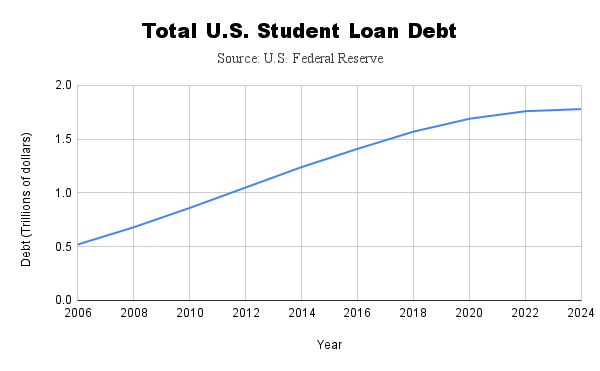
For middle-class families, paying for college may mean years of debt without adequate financial support. The combination of colleges raising tuition and government support remaining low leads to students being discouraged from pursuing a higher education.
With this in mind, students must be proactive in finding a college education they can afford. The process of paying for college requires students to explore many options, such as applying for independent scholarships. Databases for scholarships, such as those on the Common App, also provide students with many scholarships that they qualify for and can apply to.