


As artificial intelligence rapidly develops, FCPS struggles to limit the unethical use of AI while helping students become accustomed to navigating it.
On Oct. 23 and Nov. 19, during homeroom, CHS students were taught what AI is, FCPS AI rules and regulations, and AI literacy. Although students were instructed on how to use AI ethically, many use AI for evil more often than for good, making it more difficult to find a balance between limiting the unethical use of AI and integrating AI into the educational curriculum.
FCPS is not doing enough to curb the unethical use of AI. The county has taken measures to limit the wrongful use of AI, including blocking ChatGPT and Google Gemini on school computers. However, even though FCPS has made efforts to curb the unethical use of AI, there are existing loopholes. Although Google Gemini isn’t accessible on the website, students can still use it via the AI overview dropdown that appears after a Google search. Additionally, AI is accessible via personal computers and cell phones.
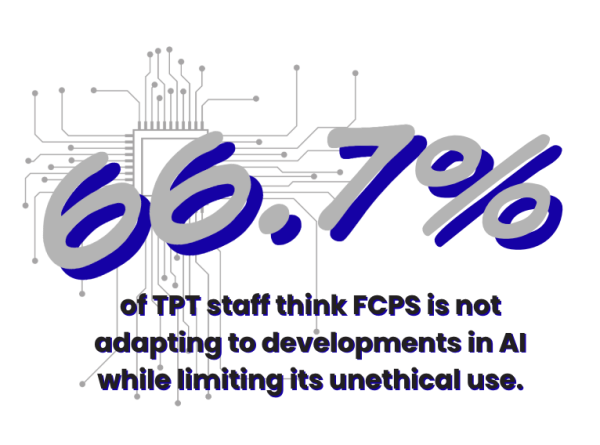
Furthermore, AI misuse is becoming increasingly difficult to detect. For instance, programs like “Humanize AI” and “AI Humanize” can transform long blocks of text into writing that appears human-like and plagiarism-free within seconds. By altering sentence structure, diction and rhythm, these tools make it easier for AI-generated essays to evade detection software, including GPTZero, Copyleaks and Originality. As a result, students can mask the use of generative AI more effectively, posing new challenges for teachers trying to assess authentic student work.
Simultaneously, another challenge FCPS is facing is the rapid growth of AI. With 78% of organizations reporting the use of AI in 2024, up from 55% in 2023, according to Stanford University, students must be taught how to engage with AI strategically. FCPS’s responsibility isn’t just to regulate AI, but to equip students for a future where AI literacy is essential. However, students don’t feel confident or ready to enter a world increasingly dominated by AI.
Although slow, FCPS has been working to catch up on AI instruction. The FCPS Lighthouse Program has been assisting educators in navigating AI implementation in learning; however, only 15 schools are part of that program, and CHS is not one of them. The success of the program will determine whether CHS will use it at some undetermined point in the future.
Additionally, FCPS is holding a Student AI Innovation Challenge in partnership with Google. The competition will allow students to use the AI learning platform Playlab to develop solutions to school and community issues while building essential skills for students to face the future.
Furthermore, at an event called “FCPS Forward: AI & The Future of Learning” on Nov. 3, Superintendent Michelle Reid and division leadership announced a plan to collaborate with Google to expand Playlab’s presence in school, aiming to boost AI literacy. However, FCPS needs to solidify the dates and implement the programs within the next few months for students to gauge whether FCPS can successfully catch up to the exponential growth of AI.


