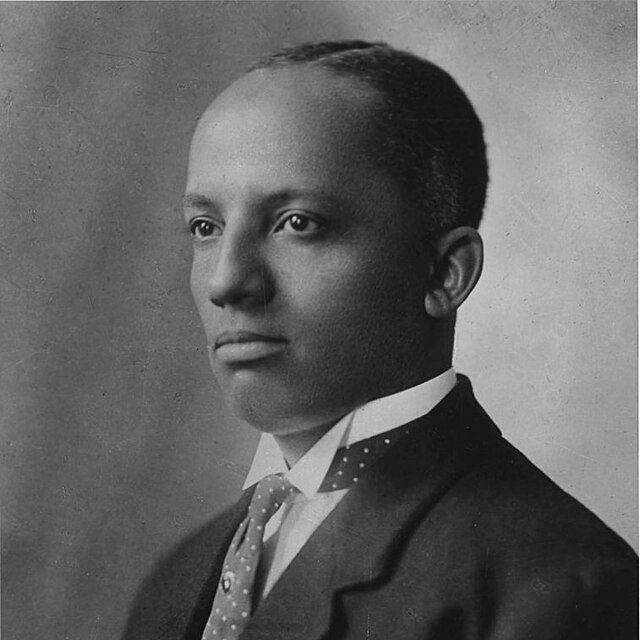
For all intents and purposes, Black History Month has overstayed its welcome. Carter G. Woodson, who created Negro History Week in 1926 with the hope that the weekly celebration would eventually become unnecessary, might’ve been disheartened that it’s lasted so long.
Yet here we are, 100 years after the birth of Negro History Week and 50 years after it became Black History Month. In effect, this month stands against everything Woodson had intended. Woodson wrote in “The Journal of Negro History” that his original observance was to be considered “not so much a Negro History Week as it is a History Week” and the goal was to “emphasize not Negro History but the Negro in History.” According to the Association for the Study of African American Life and History, his aim was for the weeklong celebration to eventually shift to a year-round commemoration of Black history, so that it would be fully integrated into American history.
Instead, Black History Month, as it stands, relegates the teaching of Black history to one month and gives people and institutions a pass on exploring that history and culture for the other 337 days of the year. It inherits the same flaws all other heritage months possess in that they inadvertently tell their communities, “here, this is the month you matter,” and alienates these groups rather than integrate them. Indeed, the very concept of a “Black History Month” inherently creates a distinction between Black history and American history.
Black History Month also fails to inspire meaningful reflection on Black History. The same enslaved people, abolitionists or civil rights figures are taught, quoted and paraded around repeatedly, their legacies sanitized and distorted to appeal to everyone and offend no one. You’ll seldom hear in a school classroom that Martin Luther King Jr. was a radical anti-capitalist, or that Frederick Douglass advocated for armed resistance to slavery; instead, Black History Month reduces these figures into harmless, politically correct symbols.
So, Black History Month fails in Woodson’s goal of erasing the distinction between Black history and American history. It fails to accurately portray the “Negro in history.” It’s limiting and reductive; its meaning has been lost and one might even say we’d be better off without it.
Not quite.
Yes, Woodson believed the weekly-turned-monthly observance should one day end. He hoped there would be a time when Black history would be fully integrated into yearlong school curricula, and that a specific celebration would be unnecessary. But it’s difficult to conceive that he would be satisfied with the integration of Black history into the American consciousness today.
After all, in the last five years, 20 states have passed laws limiting how K-12 schools can teach Black history, according to Education Week. School curricula continue to superficially teach Black history; a 2015 study by the National Council for the Social Studies found that U.S. history classrooms devoted only 8-9% of total class time to Black history, with much of that time focused only on slavery and the civil rights movement. Further, the College Board added AP African American Studies to their course options in 2025, further separating Black and American history and giving the other history courses an excuse not to further integrate Black history into their curricula.
Taking away Black History Month would not solve anything. It would remove one of the few structural incentives schools have to teach Black history at all, replacing an imperfect system with no system whatsoever. Until Black history is meaningfully integrated into yearlong curricula, removing the month would only lead to greater neglect.
However, we should not ignore the flaws Black History Month possesses. We should look forward to a day when it is no longer necessary, when we’ve reached a point in which all races and cultures are discussed, explored and treated equally, just as Woodson hoped. Removing it now would be pretending that we are already at that point or that ignorance and racism will magically end if we stop mentioning it. At the very least, this month forces us to keep talking about Black history, and that is a luxury that we cannot afford to give up right now.