

As the largest school district in Virginia, FCPS policies affect not only its students and staff, but the many nearby districts that take inspiration from it. This makes it all the more worrying that the district’s sustainability efforts are hindered by recent funding changes.
With the 28 million square feet of building space that the district has, FCPS’ energy use is enormous — CHS alone uses over 20 million kBtu annually — leading the district to implement several programs to improve sustainability. One such initiative was the Get2Green program, which provides educators with resources to integrate sustainability into their lessons.
As of March 2025, FCPS had also saved over $100 million in energy since 2014, cutting its energy use by nearly a third. This was made possible by FCPS’ switch to LED lights and the addition of solar panels, along with overhauls of HVAC and plumbing systems to maximize efficiency.
These changes, while doubtlessly successful, needed lots of funding. To buy 42 electric school buses, for example, the district received a grant of nearly $17 million from the Environmental Protection Agency in 2024.
FCPS’ policies on transgender students have since led the Department of Education to withhold nearly $167 million federal funding, which not only reduces the budget as a whole. When federal funding is withdrawn, schools may relocate their funding for sustainability to things that are more essential to the operation of schools.

As a result, FCPS can no longer stay as committed to its sustainability goals as it historically has been. Instead of changes in infrastructure that could initially cost millions, the district has to rely more on programs such as Get2Green that make less direct progress, but educate FCPS’ community.
This doesn’t mean, however, that sustainability is expendable or not strategic. Efficient energy use in a district as large as FCPS can cut down unnecessary spending by an enormous amount, as shown by the switch to more efficient energy sources since 2014. The district can — and should — overcome this obstacle of reduced federal funding by seeking additional state- and local-level funding to compensate for the potential lack of federal grants moving forward.
To maximize sustainability in this new financial setting, students should take advantage of the wide array of opportunities they have to contribute to sustainability. These range from simply being more conscious of reducing waste and recycling, to student organizations or programs, especially the numerous ones offered for high schoolers.
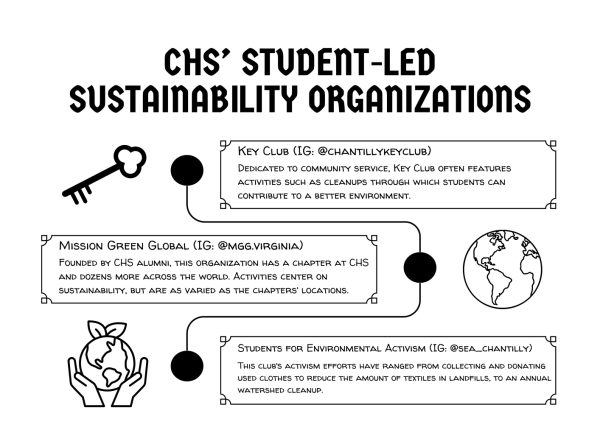
CHS’ own Get2Green program, known as the Eco-Chargers, allows students to engage in numerous sustainability-related efforts for the school community as part of a county-wide effort to teach students about sustainability. Student-led organizations, such as Key Club, Students for Environmental Activism (SEA) and Mission Green Global, allow for students to improve their environment while practicing active leadership and initiative within their community.
While certain parts of sustainability remain in the balance due to budget constraints, FCPS’ status as one of the nation’s largest school districts means that its actions toward sustainability not only carry huge impacts on energy usage, but set an example for others. With this in mind, the district, and the community, must find a way forward.


